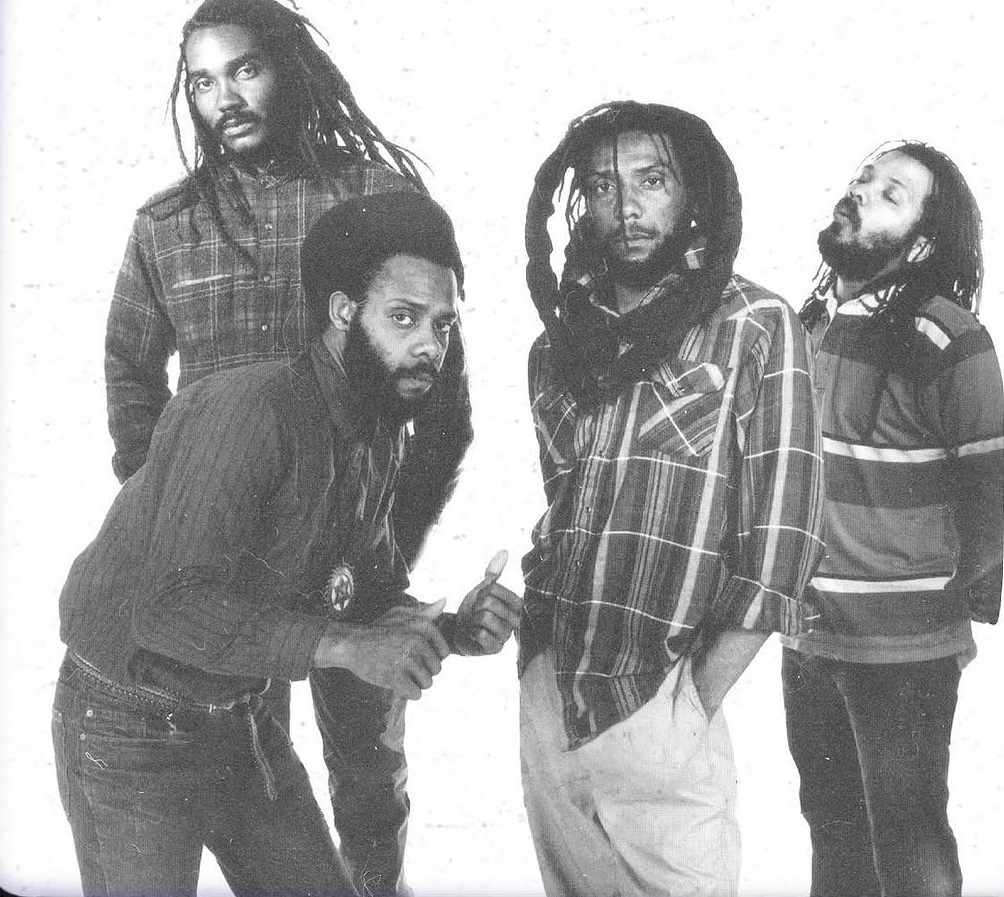
H.R. and Bad Brains: The Voice That Gave Punk a Soul
A PaperMedia Exclusive on Hardcore, Rastafari, and the Evolution of Human Rights in Music
There are bands that define a genre, and then there are bands that redefine what a genre can carry.
Bad Brains belong to the second category. And at the center of their transformation—of punk from raw reaction into something deeper—stands H.R. (Paul Hudson), a frontman whose voice has always existed between chaos and clarity.
To understand H.R. is to understand a contradiction: a performer known for volatile, unpredictable live shows who simultaneously carried one of the most spiritually grounded messages in punk history.
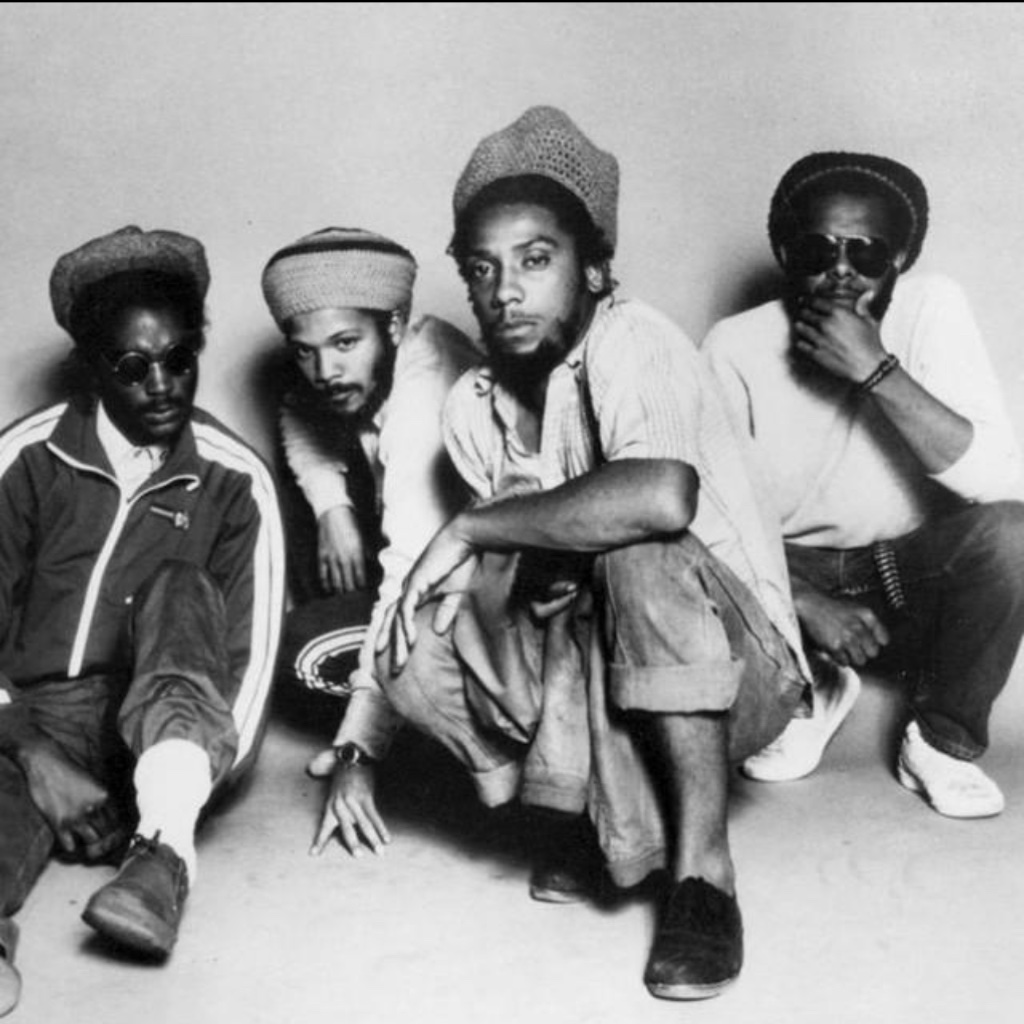
Bad Brains — the band
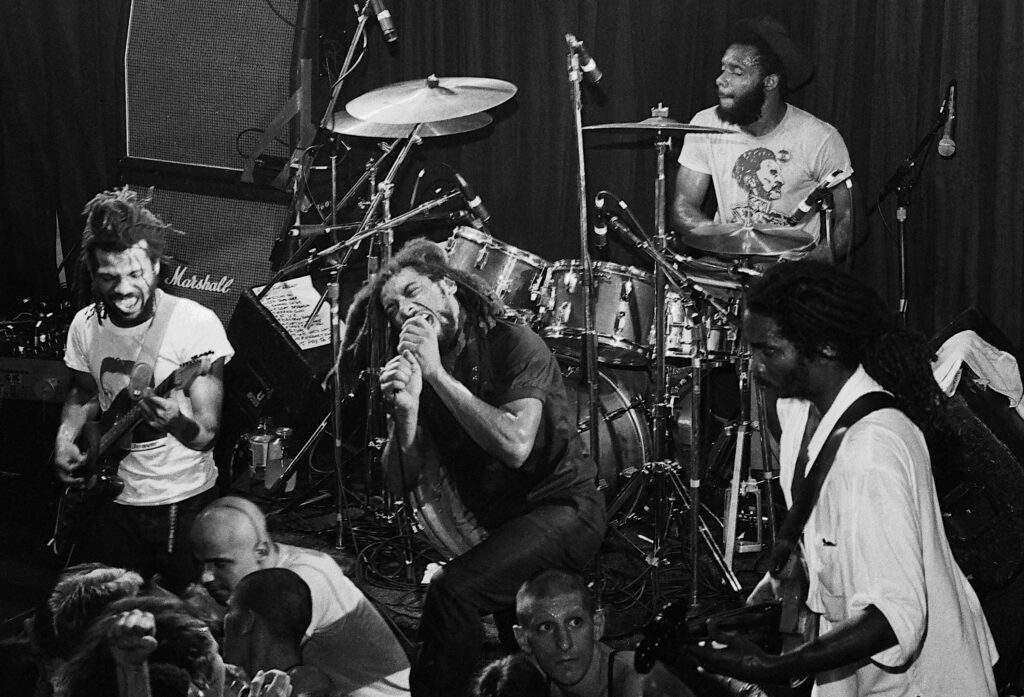
Bad Brains live on stage
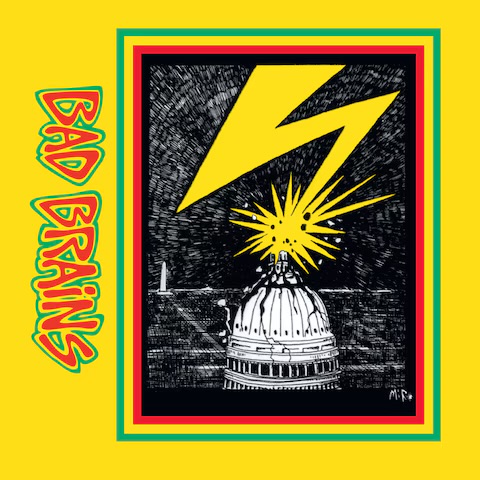
Bad Brains Album Art
The Origin of the Storm
Late 1970s Washington, D.C. was not a place for subtlety. Hardcore was forming in real time—fast, aggressive, and stripped of excess. When Bad Brains emerged, they didn't just match that energy. They exceeded it.
Their performances became legend:
- —Speeds faster than their peers
- —Precision that bordered on technical mastery
- —Shows that felt like they could collapse at any moment
H.R. was the center of that instability. He moved through performances like a force rather than a figure—jumping into crowds, halting songs, shifting direction without warning.
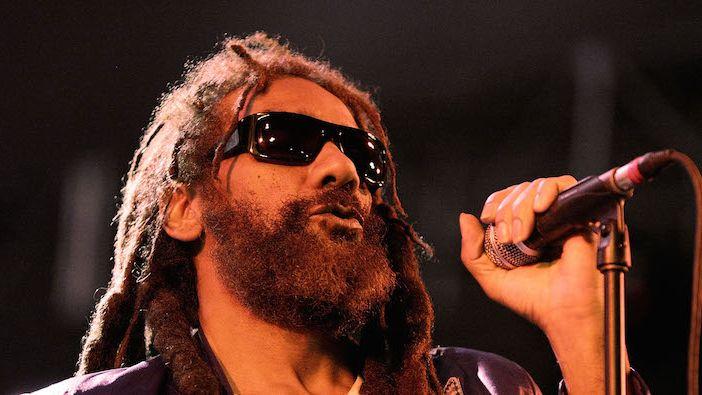
H.R. performing live
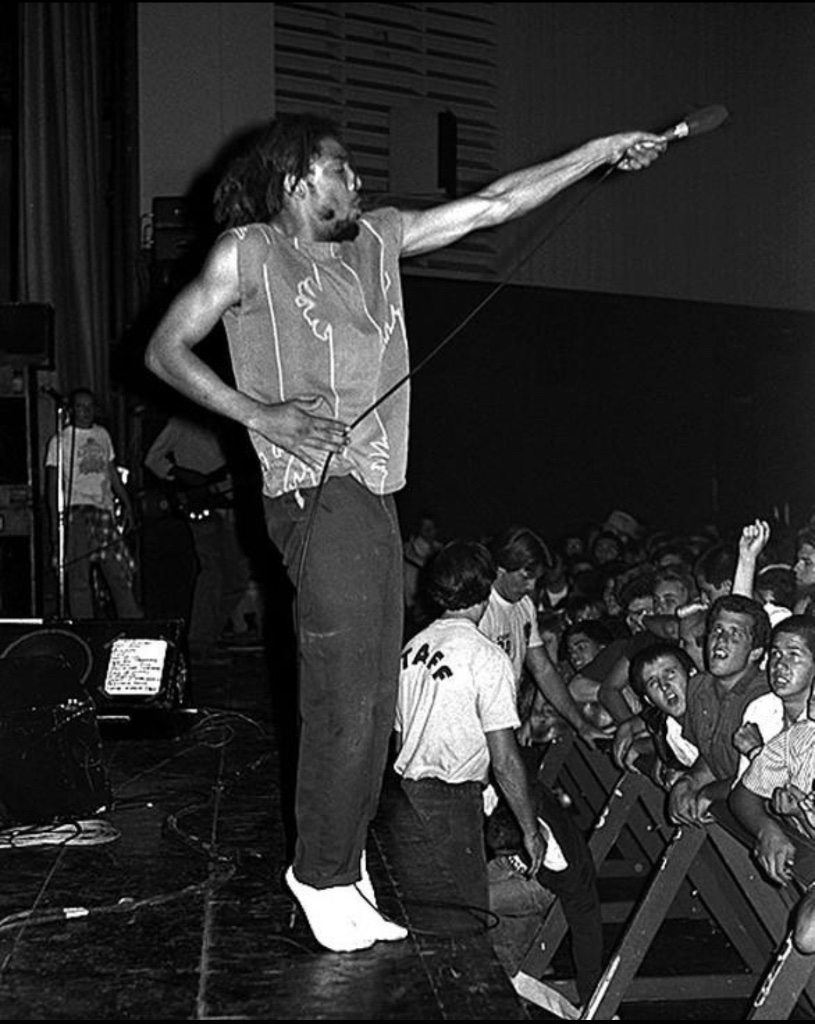
H.R. on stage with mic
But even then, something else was happening beneath the surface.
The Second Language: Reggae
While the band's hardcore material defined their reputation, it was their reggae recordings that revealed their purpose.
Tracks like Jah Calling, Leaving Babylon, and I Luv I Jah weren't departures from punk—they were extensions of it.
This is where Bad Brains diverged from every other band in the scene. They didn't treat reggae as influence. They treated it as equal language.
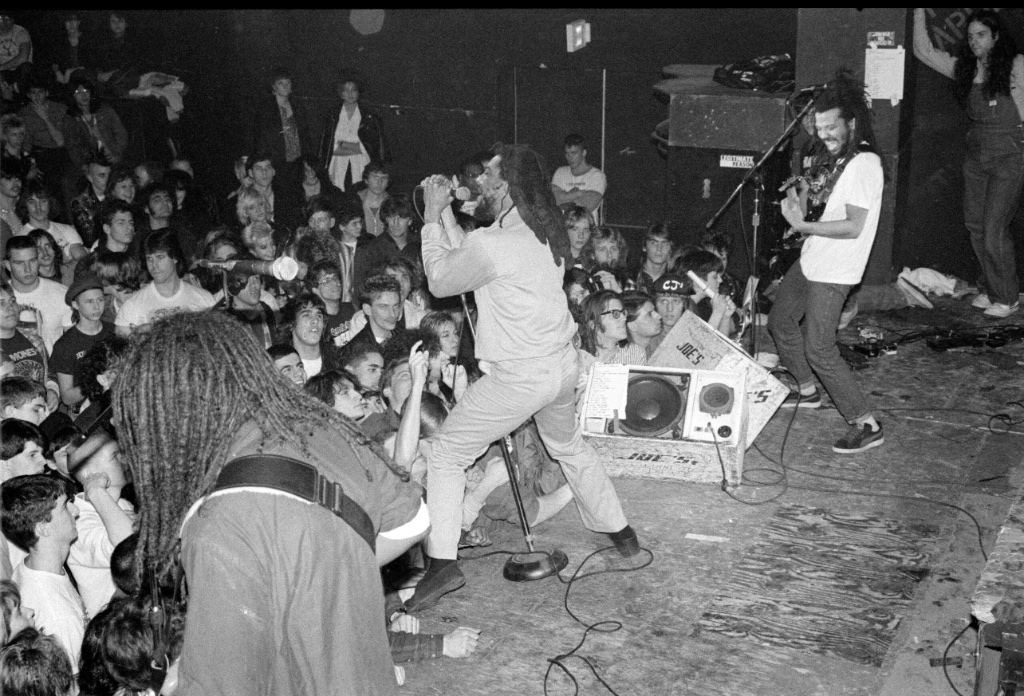
Bad Brains live energy
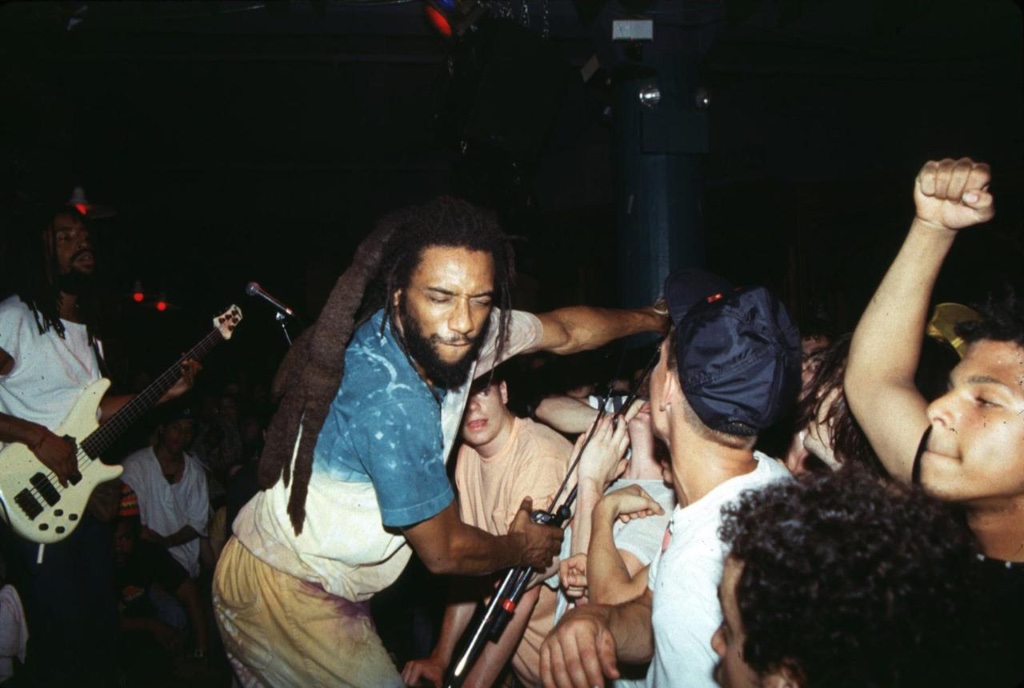
Bad Brains crowd dive
Rastafari: The Foundation of the Message
That language came from Rastafari.
Born in Jamaica in the 1930s and shaped by figures like Marcus Garvey and Haile Selassie I, Rastafari is built on spiritual awareness, resistance to oppressive systems—what followers call "Babylon"—and cultural identity and liberation.
Don't miss a drop
Get new music first.
Weekly artist spotlights, playlist drops, and editorial — straight to your inbox.
Reggae became its voice.
When that voice entered punk through Bad Brains, it expanded the genre's purpose. Punk was no longer just rebellion—it became a vehicle for philosophy.
The Human Rights Message
H.R. has often been associated with human rights, but not in a traditional sense.
There are no overt political speeches or slogans in his work. Instead, the message is embedded in the insistence on positive mental attitude (PMA), the rejection of systemic control, and the pursuit of spiritual clarity.
Songs like Attitude reframed punk aggression as something constructive, while Leaving Babylon positioned liberation as both physical and psychological.
Chaos, Context, and Growth
H.R.'s early performances have often been labeled "wild" or "unpredictable." But that framing misses something important.
Those moments were not random—they were the result of a mind moving faster than structure, a collision between punk energy and spiritual philosophy, and the pressure of carrying something ahead of its time.
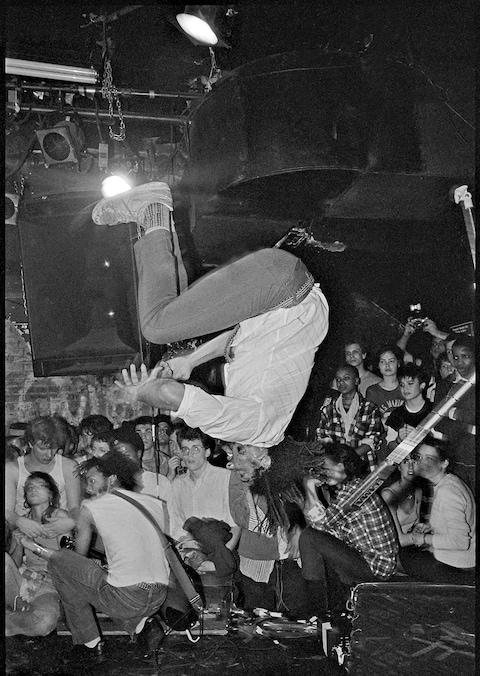
H.R. stage dive
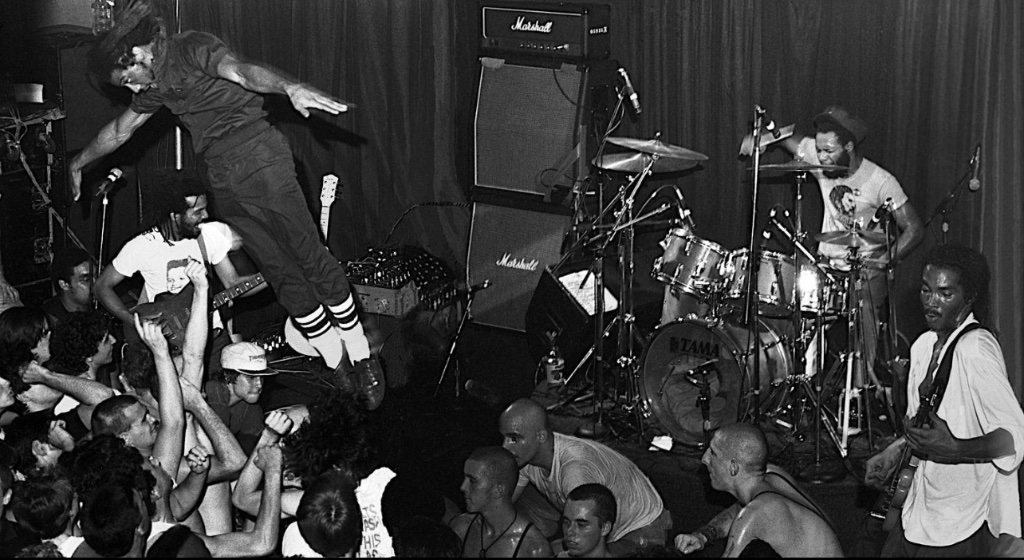
Bad Brains crowd surf
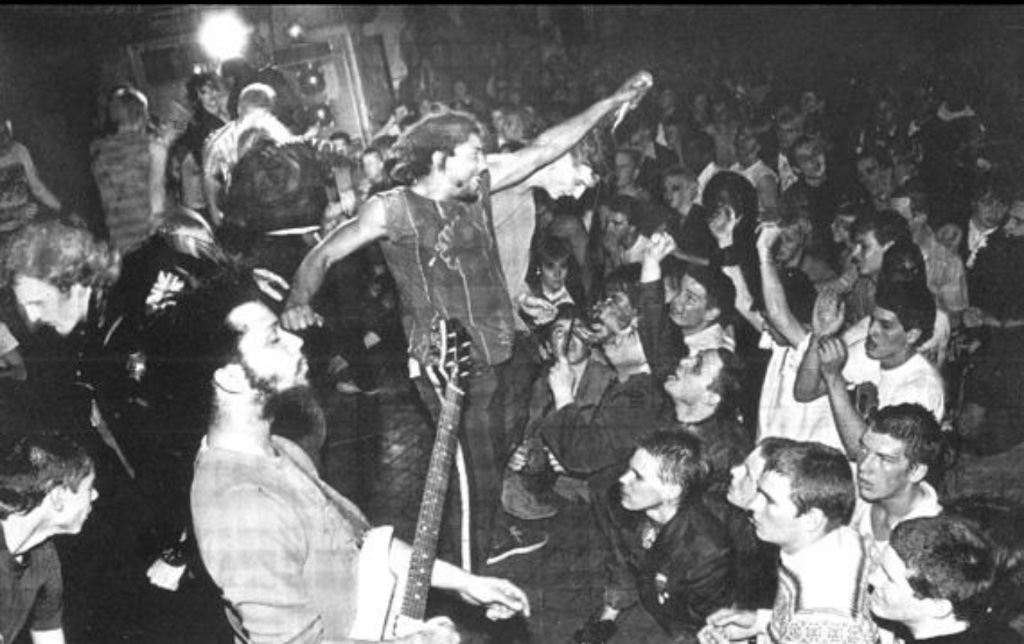
Bad Brains early show
Over the years, that energy has not disappeared.
It has been refined.
The Present
Today, H.R.'s performances reflect a different kind of authority.
Where once there was volatility, there is now control. Where once there was rupture, there is now alignment.
The message remains the same. The delivery has evolved.
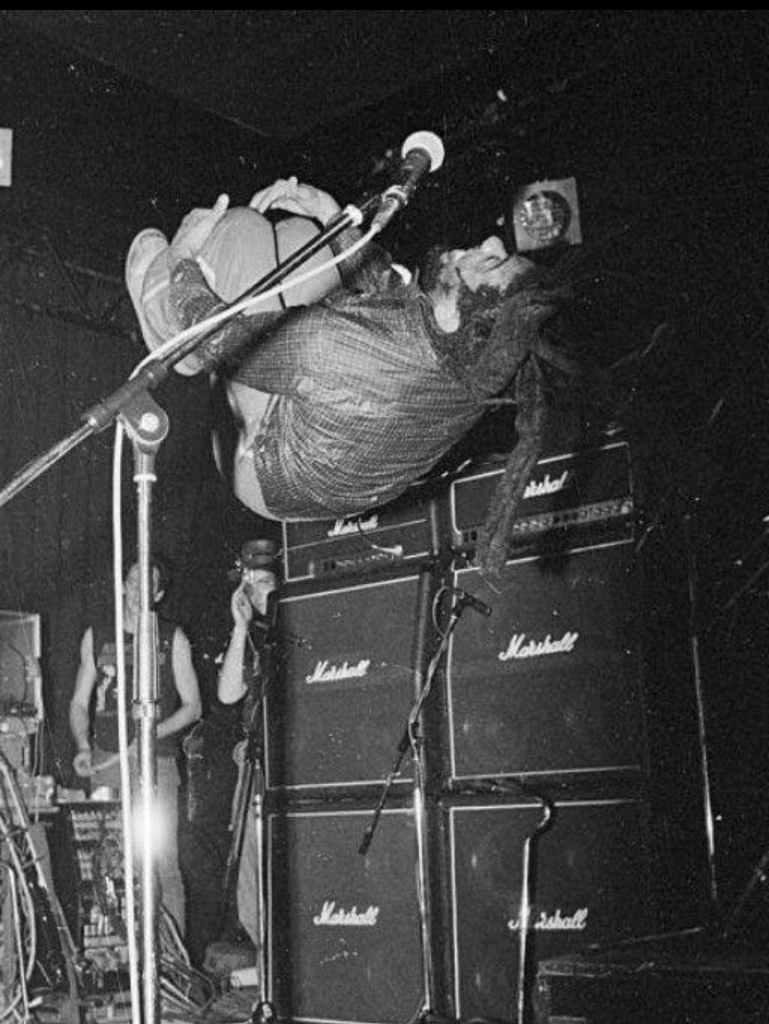
H.R. on Marshall stacks
Bad Brains didn't just change punk.
They changed what punk could hold.
And H.R.—through decades of movement, tension, and transformation—remains the clearest expression of that shift.
Limited Availability
We work with a select number of artists.
Coverage is curated, not distributed.
Apply for Coverage
PaperMedia · Editorial reel
View on InstagramStay Updated
Subscribe to our Weekly Newsletter
Join our mailing list to receive the latest artist spotlights, exclusive interviews, and underground music discovery directly in your inbox.
Discussion
Start the Conversation
Be the first to share your thoughts on this article.
Join the Discussion
Share your perspective — your email stays private.