
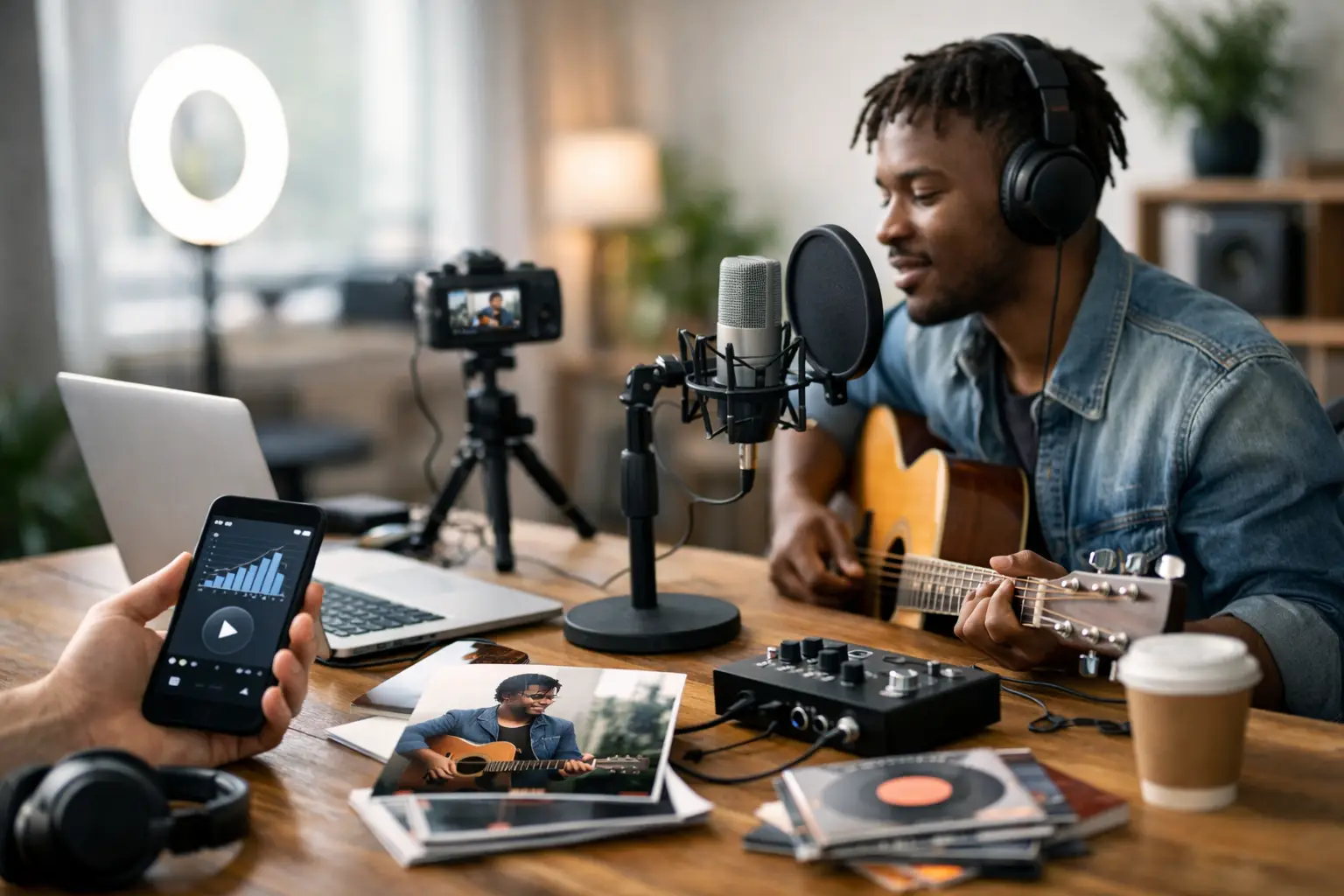
A lot of artists still treat promotion like a last-minute panic attack. The song is mastered, the cover is done, the release date is a week away, and suddenly everyone is asking who is pitching press, who is cutting content, and why there is no pre-save plan. A real independent artist promotion guide starts earlier than most people think, and it works best when promotion is built into the release - not taped onto it.
The hard truth is that good music is not enough by itself. That is not a cynical take. It is just how the current market behaves. Independent artists are competing in a crowded attention economy where songs, visuals, stories, and timing all shape whether a release lands or disappears.
What an independent artist promotion guide should actually solve
Most artists do not need more random tips. They need a system. Promotion should answer a few basic questions before release day arrives: who is this record for, what makes it memorable, where will people discover it, and what happens after they hear it once?
That matters because promotion is not one lane. It is audience development, media positioning, platform strategy, and relationship building happening at the same time. If even one of those pieces is missing, the campaign can still get attention, but it usually does not convert into long-term growth.
A smart campaign begins with positioning. Before you send a single email or post a teaser, get clear on the angle. Not every song needs a dramatic narrative, but every release needs context. Maybe it is a sonic shift. Maybe it was produced in an unexpected scene. Maybe the artist has momentum from local shows, a visual identity that stands out, or a story that media can actually use. If you cannot explain why this release matters in two sentences, neither can anyone else.
Start promotion before the release exists in public
The biggest mistake indie artists make is waiting until the song is live to begin talking about it. By then, you are already late. Attention has to be warmed up before the release, especially if you do not have a massive audience.
That does not mean posting the same snippet every day for three weeks. It means building a runway. Your first step is asset planning. Have your short-form video clips, press photos, cover art variations, clean metadata, release copy, and artist bio ready before outreach starts. If your materials look rushed, people assume the campaign is rushed too.
Then build a timeline that matches your size. A developing artist with a small but active audience may need three to four weeks of focused setup. A bigger single with editorial ambitions may need six to eight. More time does not always mean better results, but too little time almost always limits your options.
Pre-release content should create recognition, not just noise. Tease the record’s mood, visual world, or story. Give people a reason to care before asking them to stream. If the song has an emotional center, translate that into content people can feel, not just consume.
Promotion channels are not equal for every artist
One of the fastest ways to waste money is copying someone else’s rollout. A rap artist breaking through on performance clips does not need the same strategy as an alt-pop act with strong visual branding or an R&B singer whose best growth lever is playlist support. The right channel mix depends on the music, the audience, and where the artist already has signal.
Press can still matter, but only when there is a story and realistic targeting. Playlist promotion can help, but it works better when the record fits clear listening behavior. Social content is essential, but reach without a conversion path is mostly vanity. Live shows build loyalty, but they do not automatically translate into digital growth unless the artist captures that energy online.
This is where a lot of campaigns get blurry. Artists chase every platform instead of identifying which platforms can move the release forward. If Instagram is where your audience watches your face, TikTok is where they share your hook, and Spotify is where they return to the full track, your campaign should connect those touchpoints. Promotion works better when each channel has a job.
Press, playlists, and creators each do different work
Media coverage helps with validation and search presence. It gives the release cultural framing. Playlists help with passive discovery and repeat listening. Creator support and user-generated content can create velocity fast, but that attention can be shallow if the song and brand are not ready for it.
The trade-off is simple. Press usually takes more lead time and stronger narrative packaging. Playlists can move quicker, but competition is intense and placement is never guaranteed. Creator campaigns can spike interest, but if the audience lands on weak profiles or inconsistent branding, the bump fades.
Build a campaign around one clear message
Artists often overcomplicate their rollout because they think more angles mean more opportunity. Usually the opposite is true. The strongest campaigns have one central message that keeps showing up in different forms.
That message could be about the song itself, the artist’s evolution, a lifestyle connection, a local scene, or a bigger emotional theme. What matters is consistency. If the press pitch says one thing, the visuals say another, and the captions say something else, people feel the disconnect even if they cannot name it.
A campaign message also helps collaborators do their job better. Managers, publicists, content editors, playlist teams, and booking contacts all work more effectively when they are pushing the same core narrative. That alignment is often what separates a decent release from one that actually accumulates momentum.
The best independent artist promotion guide includes content strategy
Content is not decoration anymore. It is infrastructure. For many independent artists, content is the main bridge between discovery and fandom. But not all content deserves your time.
The strongest content usually does one of three things. It proves the artist can perform, it reveals personality, or it deepens the world around the release. Everything else is filler unless it serves a specific campaign goal.
Performance content matters because people still want evidence. They want to know the artist can actually deliver, not just post well. Personality matters because algorithms can surface a song once, but people follow humans. World-building matters because music is consumed inside aesthetics, scenes, moods, and identity.
This does not mean every artist needs to become a full-time content machine. It means choosing formats you can sustain without flattening your creative process. If you hate talking to camera, lean into rehearsal clips, visual storytelling, or behind-the-scenes footage. If you are magnetic in interviews, use that. Promotion gets better when it feels native to the artist.
Outreach is still a relationship game
A lot of independent musicians want scalable growth, which makes sense. But some of the most effective promotion still comes from direct, human outreach. Editors, playlist curators, DJs, promoters, publicists, venue talent buyers, and niche creators all respond better when the pitch feels informed and specific.
Generic blasting is easy to spot. So is desperation. Good outreach is concise, clear, and tailored to the recipient. Why this song, why now, and why them? If you cannot answer those three points, the pitch is not ready.
This is one place where operational discipline really matters. Keep your assets organized. Track who has been contacted, who responded, and what each follow-up should be. A messy campaign creates avoidable losses. An organized one creates compounding value because every release strengthens your network for the next one.
For artists building long-term careers, this is the real game. Not one viral moment, but a growing web of trusted relationships around the project. That is where credible media support, campaign management, and distribution infrastructure can work together instead of pulling in separate directions.
Measure what actually matters
Streams matter, but they are not the whole story. A campaign can underperform on day one and still succeed if it improves audience quality, increases save rates, grows your email list, strengthens media positioning, or drives better show attendance. On the other hand, a campaign can post flashy numbers and still fail if nobody sticks.
The most useful metrics depend on your stage. If you are early, focus on signals of resonance: saves, shares, profile visits, completion rates on content, and repeat engagement. If you are more established, look harder at conversion efficiency, audience retention, and whether your promo channels are feeding each other.
There is no single perfect benchmark because genre, geography, and release history all change the math. But every campaign should teach you something practical. Which assets got attention? Which pitches converted? Which audience segments cared most? That data is not boring. It is creative direction in disguise.
A better way to think about artist promotion
Promotion is not begging people to care. It is reducing friction between the right music and the right audience. That mindset changes everything. It makes your rollout more strategic, your content more intentional, and your outreach less random.
For artists who want both visibility and structure, platforms like PaperMedia reflect where the industry is headed - less fragmentation, more connected execution across editorial, discovery, and growth support. That model makes sense because modern artist development is rarely about one tactic. It is about how the pieces work together.
The best campaigns do not just announce a song. They create a context people can enter and return to. If your next release can do that, you are not just promoting music. You are building gravity around your name.
