A weak pitch usually fails before anyone hears the song. That is why press kits still matter. For artists trying to land coverage, secure bookings, or get a publicist, manager, or label rep to pay attention, a solid press kit is less about looking polished for the sake of it and more about making the next step easy.
In music, people move fast. Editors are sorting through inboxes. Talent buyers are comparing dozens of acts. Playlist curators, agents, and brand teams are all asking a version of the same question: who are you, what do you sound like, and why should I care right now? Good press kits answer that without forcing anyone to dig.
What press kits are really for
A lot of artists treat press kits like a formal requirement, something you build once because someone said you should have one. That approach usually creates bloated PDFs, outdated bios, and folders full of random assets with no clear point of view. The better way to think about press kits is as decision-making tools.
A real press kit helps someone make a yes-or-no call faster. Yes, this artist fits our publication. Yes, this act makes sense for the lineup. Yes, this campaign looks organized enough to support a feature, a premiere, or a partnership. If your materials do not reduce friction, they are not doing their job.
That is also why context matters. The same artist may need one version of a press kit for media, another for booking, and a tighter version for sync or brand opportunities. The core identity stays the same, but the emphasis shifts depending on who is receiving it.
What to include in press kits
Most effective press kits are not complicated. They are curated. The best ones give people exactly what they need to understand the artist, assess momentum, and move forward.
Start with a short artist bio that sounds like a human wrote it. This is where many artists lose the room. A bio packed with vague claims, genre clichés, and oversized comparisons usually reads as insecure. You do not need to say an artist is "the next big thing." You need to explain what they make, where they sit culturally, and what makes the project distinct.
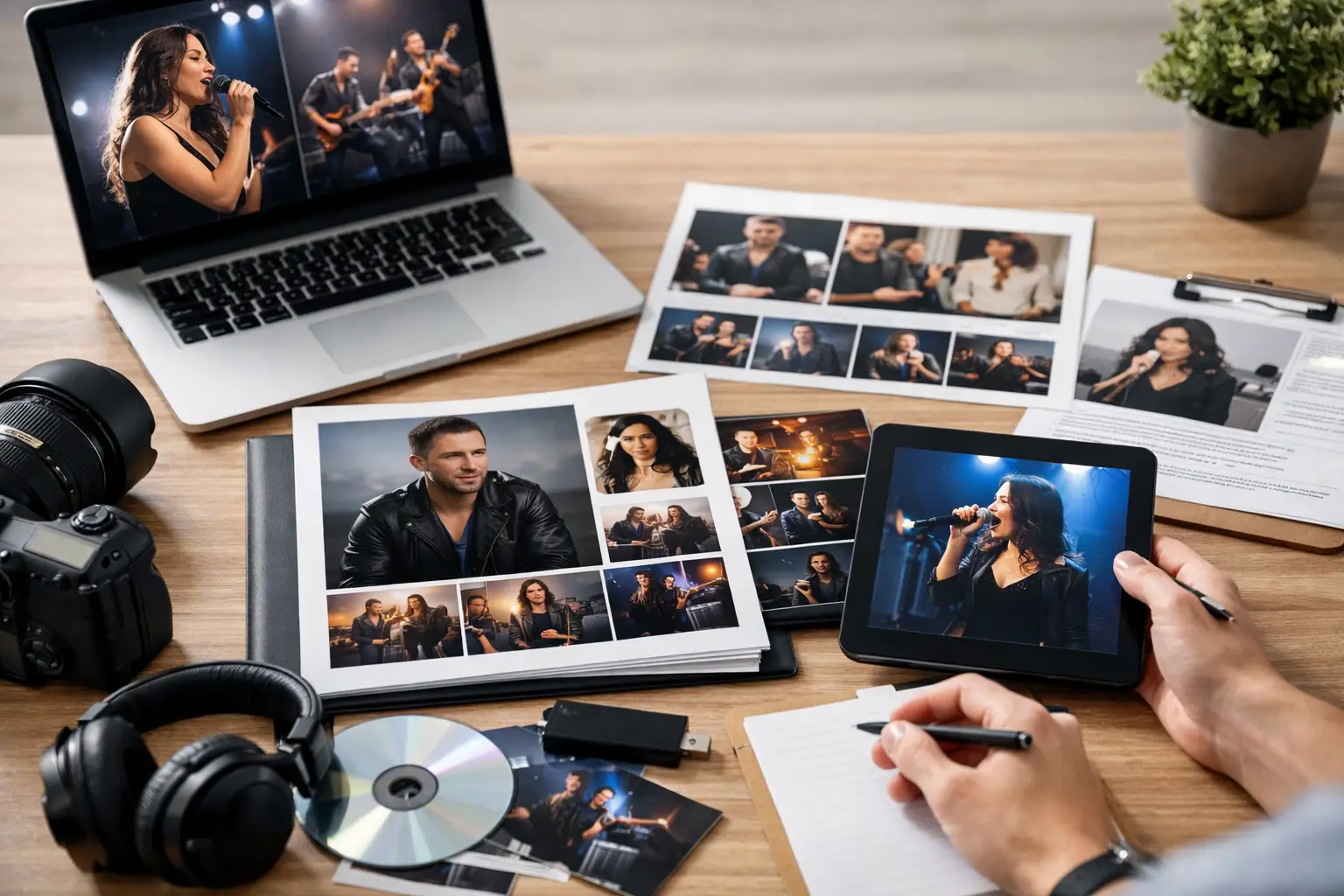
Then include high-quality press photos. Not twenty. Usually three to five strong options are enough. They should match the artist's actual brand, not a random mood board from six aesthetics ago. If your current visuals say underground club artist but the music feels like indie folk confessionals, that disconnect will register immediately.
Music comes next, and this seems obvious, but presentation matters. Include the most relevant release or releases, not an archive dump. If there is a current single, EP, album, or video being pushed, that should lead. If you are asking for coverage around a release date, make sure the timing is clear.
Press quotes or notable coverage can help, but only if they add credibility. A short, strong quote from a respected outlet matters more than ten logos from low-quality repost sites. The same goes for career highlights. Focus on signals that actually mean something, like festival appearances, support slots, meaningful streaming milestones, sync placements, or collaboration credits.
Contact information should be impossible to miss. That means a direct email for the artist, manager, publicist, or team member handling outreach. Too many press kits make it weirdly hard to know who to contact, which kills momentum right when interest starts building.
The assets that earn their place
If you want your press kit to work harder, include a few practical extras. A one-sheet for a specific release can help if you are pitching media or industry contacts around a launch. A stage plot and tech rider matter if you are sending materials to venues or promoters. Social links can be useful, especially if they show an active fan connection, but they should support the story, not replace it.
There is a trade-off here. More assets can make you look prepared, but too much information can make the package feel messy. If something does not help the recipient make a decision, leave it out.
Why most artist press kits miss
The biggest problem is not lack of talent. It is lack of editing. Artists often put together press kits from their point of view instead of the receiver's. They include old achievements, unfinished branding, and bios that try to tell their entire life story. That is not strategy. That is overflow.
Another common issue is inconsistency. The photos feel expensive, the bio feels generic, the streaming links are outdated, and the social presence tells a completely different story than the music. Industry people notice those gaps because inconsistency usually signals that a campaign is not fully formed.
Then there is timing. A press kit built after outreach has already started is usually rushed. If you are emailing writers, bookers, or partners before your assets are clean and current, you are burning opportunities you may not get back. Attention is easier to lose than regain.
How to build press kits that feel current
The strongest press kits reflect a live campaign, not a static artist page. That means they should change as your story changes. New release coming out? Update the headline framing, featured assets, and pitch angle. Just got support from a key playlist or media outlet? Add it if it adds real weight. Playing a notable festival or opening for a strong match? That belongs in the package.
Think in terms of narrative. What is happening now that gives this artist momentum? Sometimes the hook is the music itself. Sometimes it is the visual world, the co-sign, the live run, or the scene the artist is coming out of. Press kits become stronger when they frame movement, not just identity.
This is especially true for independent artists. You may not have major-label statistics, but you can still present a compelling case if the story is coherent. A developing artist with strong visuals, a clear sonic lane, smart rollout timing, and evidence of real community can be more interesting than a bigger act with no point of view.
Press kits for media vs. booking
Not every recipient is looking for the same proof. Media contacts usually care about story, relevance, and assets they can use quickly. That means a strong bio, current release details, good images, and a clean reason this artist matters now.
Booking contacts are usually thinking about draw, fit, professionalism, and logistics. They want to know what kind of room makes sense, whether the artist has a real audience, and whether the team knows how to communicate. In that context, live photos, performance footage, ticket history, or support-slot experience may matter more than a long editorial bio.
This is where artists get tripped up by trying to make one universal package do everything. You can keep one master set of assets, but the presentation should shift depending on the ask.
The role of design, and where people overdo it
Design matters because perception matters. But expensive design cannot save weak material. A clean, well-organized press kit with strong photos and sharp writing will outperform an overdesigned deck full of filler almost every time.
What people respond to is clarity. They want to scan fast and get the signal. If your layout is too busy, your fonts are trying too hard, or every page feels like a different brand universe, the package starts looking less professional, not more.
For most artists, simple wins. A clean digital press kit, organized assets, and concise copy are enough. Save the heavy visual treatment for campaigns where the art direction is central and already aligned across your release strategy, social presence, and live identity.
What makes a press kit believable
The strongest press kits do not oversell. They present the artist with confidence, but they leave room for the work to speak. That means fewer inflated claims and more grounded proof.
If you are early in your career, own that stage and present it well. There is nothing wrong with being emerging. What hurts is pretending to be further along than the record shows. Credibility is built when the story, assets, and traction all match.
That is part of why editorial platforms and artist development teams pay close attention to packaging. A good press kit suggests the artist understands positioning. It shows they can enter industry conversations prepared. At PaperMedia, that matters because visibility works better when the foundation is already organized.
A press kit will not create demand where none exists. It will not fix weak songs, confused branding, or a rollout with no strategy. But it can absolutely turn interest into action when the music is ready and the moment is real.
If your current materials feel like a pile of assets instead of a clear case for why this artist matters, that is the fix. Make it easier for the right people to say yes.