
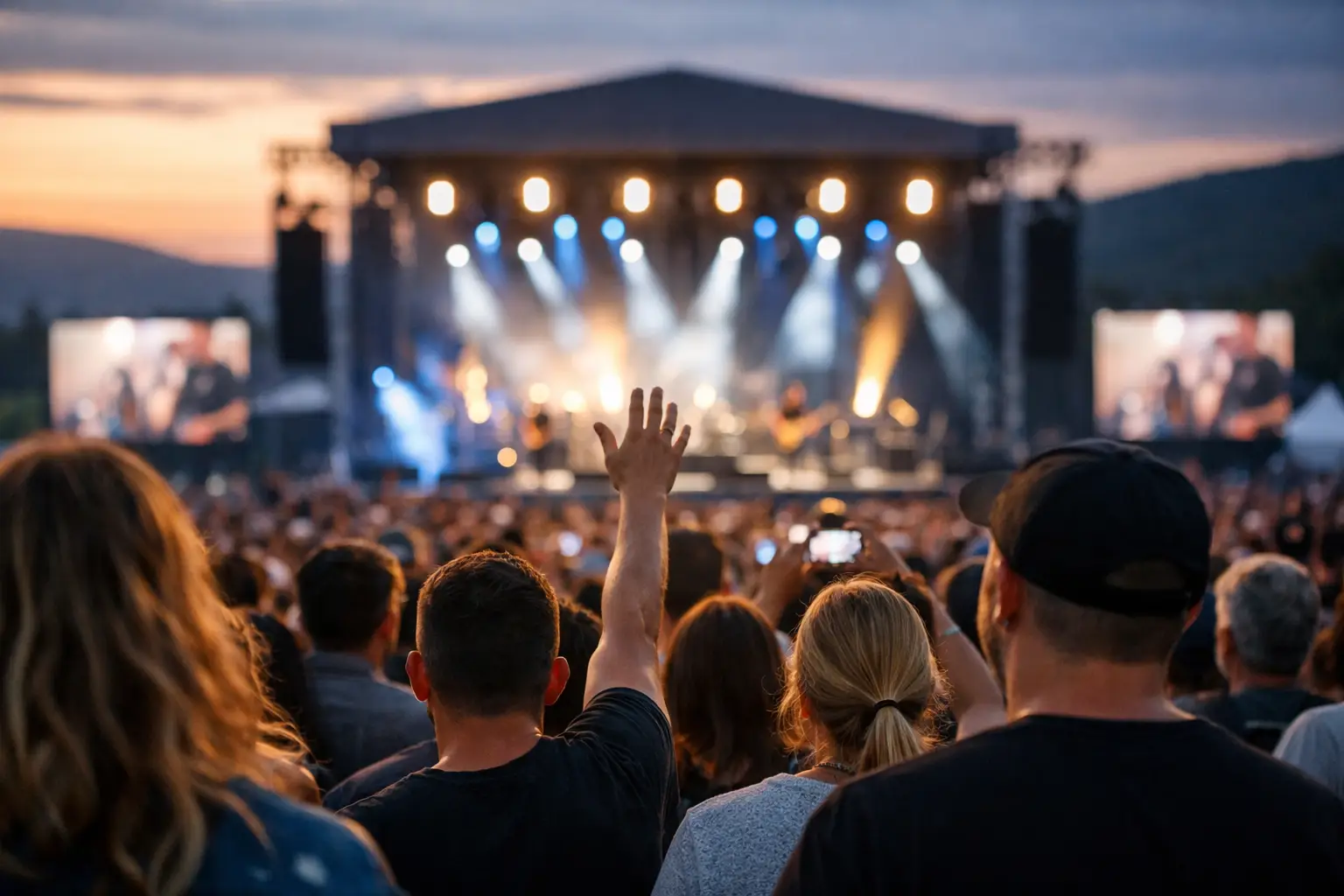
NEPA does not move like New York or Philly, and that is exactly why the live calendar matters here. If you are tracking upcoming concerts in NEPA 2026, you are not just looking for a night out. You are reading the market - which venues are active, which genres are gaining traction, and where independent artists can realistically build momentum alongside bigger touring names.
For fans, northeastern Pennsylvania can feel unpredictable. One month delivers a strong run of club dates, casino bookings, and theater shows. The next month feels quiet until a regional fair, college event, or surprise routing announcement changes the picture. For artists and managers, that inconsistency is not a flaw. It is part of the opportunity. NEPA sits in a useful lane between local loyalty and drive-market spillover, which makes it more strategic than people outside the region often assume.
Why upcoming concerts in NEPA 2026 matter
NEPA has always been more than a secondary stop. It is a test market, a holdover market, and sometimes a breakout market depending on the artist and the venue. The region benefits from proximity to larger East Coast cities while still maintaining its own audience behavior. That means a show here can pull from Scranton, Wilkes-Barre, Hazleton, the Poconos, and nearby parts of New Jersey and New York.
That reach changes the value of a concert announcement. A mid-tier artist who might get lost in a crowded metro lineup can command more attention in NEPA. On the other side, fans often get access to strong bookings without major-city ticket pressure. For independent acts, support slots and smaller room bookings in this region can translate into real data - merch movement, repeat attendance, and social engagement from listeners who are not treating the show as background noise.
What the 2026 NEPA concert calendar will likely look like
The safest prediction is not a specific lineup. It is the shape of the market.
Expect 2026 to keep leaning into a mixed ecosystem of casinos, theaters, fairs, bars, and seasonal outdoor events. NEPA is not driven by one type of venue, and that is a good thing. Casino entertainment spaces will likely continue to book recognizable legacy acts, tribute-driven draws, mainstream country, and proven touring packages. Theaters and event centers should remain the strongest lane for artists with a defined audience but not necessarily arena scale.
The club and bar circuit is where things get more interesting. That level of the market tends to reflect real shifts in listening culture first. If alt-pop, pop-punk revival, Latin crossover, country rock, or independent hip-hop gain local traction, you will usually see it there before it fully reaches larger programmed spaces. College-adjacent crowds and younger nightlife audiences still shape demand, especially when the artist can create strong pre-show social buzz.
Seasonality matters too. Summer can flood the calendar with fairs, outdoor series, and festival-style community bookings. Fall usually feels sharper from a touring perspective because artists return to cleaner routing patterns. Winter can be hit or miss in NEPA for obvious reasons, so venue reliability and weather planning become part of the equation.
The venues that shape the region
If you want to understand upcoming concerts in NEPA 2026, start with venue behavior instead of artist wish lists. The venue tells you what kind of touring business is healthy.
Large rooms in the area tend to favor acts with broad recognition and dependable ticket history. That does not always mean current chart dominance. In fact, nostalgia still sells extremely well in markets like NEPA because audiences show up for familiarity, especially when the experience feels accessible and local.
Mid-sized venues are often the real pulse check. They reveal whether the region is supporting artists who are still growing, not just artists who already built their audience elsewhere. When those rooms stay active, the local market is healthier than it might look from the outside.
Smaller stages matter just as much. They are where scenes form, where openers become headliners, and where promoters discover what the audience actually wants beyond algorithm-heavy assumptions. For independent artists, these are the rooms that can create the first meaningful regional footprint.
Genres with the best shot in 2026
Country should stay strong. That is not a bold take, but it is a reliable one. Country touring has remained durable across secondary and tertiary markets, and NEPA fits that pattern well. The blend of crossover radio appeal and strong live loyalty makes the genre an easy booking bet.
Rock also has staying power here, especially in legacy, hard rock, alt-rock, and tribute formats. NEPA crowds tend to respond to guitar-forward live shows that feel communal rather than overly curated. That does not mean newer rock acts cannot break through, but the packaging has to be right.
Pop and indie-pop are more venue-dependent. They can work, especially if the artist has social traction or regional fan communities, but they need stronger promotion and cleaner audience targeting. Hip-hop has opportunity too, though it often depends on whether promoters can align the right room, the right night, and the right security setup. Latin music is another category worth watching. In many regional markets, it outperforms industry assumptions when bookings reflect actual local demand instead of outdated programming habits.
Electronic shows can hit hard in the right setting, but consistency is the issue. NEPA can support dance-driven events, yet the market usually responds better when those shows feel like events rather than filler dates.
How artists and managers should read this market
For emerging acts, NEPA is useful because it exposes weak strategy fast. If a show underperforms here, the answer is usually visible. Maybe the room was too big. Maybe promotion started too late. Maybe the audience fit was wrong. Maybe there was no local support with real draw. That kind of clarity is valuable.
The better approach is to treat the region as a relationship market, not a one-off stop. Build around local press, scene alignment, support acts, and repeat presence. A single good show is nice. Two or three smart appearances over time are where actual market identity starts to form.
Managers should also think beyond ticket count. In a region like NEPA, a 150-cap room with high merch conversion and strong fan retention can be more useful than a half-full larger room that looked better on paper. Audience density still matters. So does proximity. Fans who drive in from nearby towns are making an active choice, which often means higher loyalty.
This is where an editorial-first platform like PaperMedia fits naturally into the larger picture. Coverage is useful, but context is what moves the needle. Artists benefit most when local or regional visibility connects to a broader growth plan rather than existing as a standalone press moment.
How fans can track the 2026 calendar smarter
The mistake most fans make is waiting for one big annual list. That is not how NEPA programming works. The market fills in waves. A casino announces one quarter at a time. A fair rolls out entertainment later. A theater drops a cluster of dates. A local promoter confirms support acts much closer to show day.
So the smartest move is to watch patterns, not just posters. Pay attention to which venues are booking consistently, which promoters are active, and which artists are routing through nearby cities. If an artist is playing Philly, Bethlehem, Binghamton, or the Hudson Valley, NEPA is often in the conversation even if it is not announced yet.
For independent music fans, this matters even more. Some of the best shows in the region will not be the loudest announcements. They will be the ones that pair a rising act with the right room and a local opener who already understands the audience.
What could change the NEPA live scene in 2026
A few factors could push the market in either direction. Touring costs are still a real issue, especially for developing artists. That can reduce the number of marginal stops and concentrate routing around only the safest rooms. If that pressure continues, NEPA venues that offer smart guarantees, reliable hospitality, and flexible promotion support will have an advantage.
Audience buying behavior is another variable. More fans are purchasing later, which makes shows look weaker than they are until the final stretch. That changes how promoters market and how artists judge demand. There is also the broader question of attention. People still go out for the right show, but generic bookings have a harder time cutting through than they did a few years ago.
At the same time, regional markets can benefit when major cities become too expensive or too crowded. Fans who want a better experience, easier parking, and less friction are often happy to catch a strong show closer to home. That dynamic could help NEPA in 2026, especially for artists whose audiences are aging out of chaotic city nights but still care deeply about live music.
The best way to look at the year ahead is not as a hunt for random dates but as a read on where the culture is moving. In NEPA, the strongest concert nights tend to reward people who pay attention early, whether they are buying tickets, booking tours, or trying to figure out which rooms are quietly becoming the next key stops.
