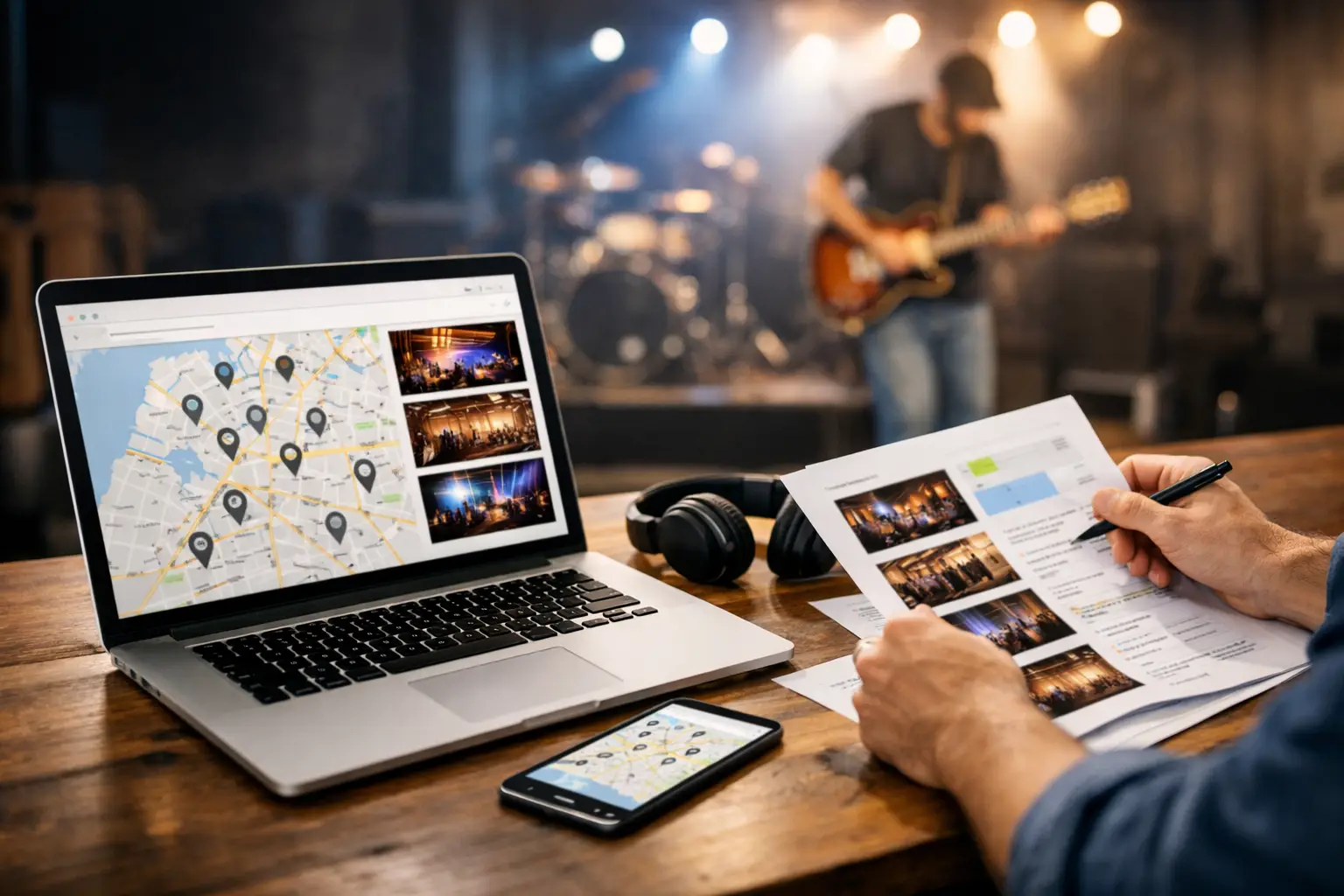
You do not need more random venue names in a notes app. You need context. A real venue database for musicians is not just a giant list of clubs, bars, DIY rooms, theaters, and listening spaces. It is a working map of where your music actually belongs, who books the room, what the crowd expects, and how to approach the venue without wasting a month on cold emails that never get opened.
For independent artists, this matters more than people admit. A bad venue list creates bad routing, weak turnout, mismatched lineups, and expensive nights that feel like momentum until the numbers come in. A smart database does the opposite. It helps you choose rooms that fit your stage in the market, sharpen your pitch, and build a repeatable booking process instead of starting from zero every time you want to play live.
What a venue database for musicians should actually do
Most artists first imagine a database as a spreadsheet with city names and email addresses. That is the bare minimum, and honestly, it is not enough. Useful venue intelligence lives in the details around the contact. You need to know capacity, genre fit, typical ticket price, whether the room books locals or favors touring support, what nights work best, and whether the venue has a history of treating artists professionally.
The difference between a contact list and a functioning database is decision-making. A contact list tells you who exists. A database helps you decide who to approach first, how to frame the ask, and whether the room can move your career forward. If you are an indie pop act with strong streaming numbers but light local history, the right 150-cap room is often better than the wrong 500-cap room that makes you look early. If you are a punk band with a strong merch game, a small but committed DIY room may be more valuable than a polished venue with a disconnected audience.
That trade-off is where many artists get stuck. Bigger is not always better. Prestige is not always profitable. More cities are not always a better tour.
Why artists outgrow scattered booking research fast
At the beginning, most musicians book shows like this: search Instagram, ask other bands, find a venue website, DM someone, send an email, wait, forget to follow up, and repeat. That can work for a one-off hometown slot. It breaks down the second you are trying to build a regional run, support a release, or coordinate with a manager, publicist, or booking rep.
Scattered research creates a hidden tax on your time. You lose contact history, send duplicate pitches, forget which venue passed, and fail to notice patterns. Maybe Boston responds well to your project but Philly does not. Maybe art-forward rooms convert better than standard rock clubs. Maybe venues tied to local tastemaker promoters consistently outperform direct outreach. You only see those patterns if your database is organized enough to preserve what happened.
This is also where live strategy connects to media and promotion. If your release campaign includes editorial coverage, playlist growth, or press outreach, your venue targets should reflect that story. The rooms you pitch are part of your brand positioning. They signal whether you are building community, chasing credibility, testing new markets, or trying to move into a more premium lane.
The most important fields to track
A strong venue database for musicians should be built around action, not decoration. City, venue name, and booking email matter, but they are just the start. Capacity tells you whether the room is realistic. Genre fit tells you whether the audience is likely to care. Past similar artists give you proof that your pitch makes sense.
You also want fields that help with follow-through: preferred submission method, last contact date, response status, follow-up date, offer terms, and notes on hospitality or production quality. If you have ever shown up to a room that looked great online and fell apart in person, you already know why notes matter.
Some of the most valuable information is not glamorous. Does the venue require local openers? Does it rely heavily on artist ticket minimums? Does the promoter answer quickly? Is there in-house marketing, or are you carrying the whole turnout burden? For independent artists operating on slim margins, these details can change whether a show helps or hurts.
How to build a database that leads to better shows
Start with fit, not geography. That sounds backward because artists usually think in terms of cities first. But if you start by defining the kinds of rooms that suit your sound, draw, and audience behavior, the city list gets smarter fast.
Look at where artists one level above you are playing, then where artists at your level are actually succeeding. Those are not always the same venues. A room may look aspirational on paper but still be too soon. Another may seem modest but consistently host the exact crowd that buys tickets, streams the catalog after the show, and comes back next time.
From there, organize venues into tiers. Your first tier should be high-fit, realistic targets. Your second tier can include stretch rooms or markets where you need warmer intros. Your third tier might be research holds, places worth revisiting once you have stronger data. This keeps your outreach focused and prevents the common trap of pitching everybody with the same generic message.
The outreach itself should reflect what is in the database. If the venue books emerging R&B acts on Thursdays and your engagement is strongest in that city on weeknights, say that. If you have local press, notable support history, or streaming concentration in the market, include it. Booking is still relationship-driven, but relevant information beats vague enthusiasm every time.
Where venue intelligence gets more strategic
The smartest teams do not use venue data only to book dates. They use it to shape campaigns. If you notice that certain rooms line up with stronger merch averages, those venues deserve priority. If specific markets generate better engagement from editorial coverage or playlist placement, that should influence routing. Live data is not separate from audience growth. It is one of the clearest signals of where your project has real traction.
This is where platforms with both cultural awareness and operational depth can offer a real advantage. PaperMedia, for example, sits at the intersection of discovery, promotion, and artist development, which is exactly where venue intelligence becomes more useful. When your live strategy is informed by media positioning and audience behavior, your database stops being admin and starts becoming leverage.
Still, there is no perfect system. Some markets are relationship-heavy, and no spreadsheet can replace a trusted local promoter. Some venues change bookers constantly, which means your data expires faster than you expect. And some rooms are great on paper but wrong for your energy in practice. A database should guide judgment, not replace it.
Common mistakes that make a venue database useless
The biggest mistake is treating every venue as equal. A long list can feel productive, but volume without qualification just creates more noise. If your database does not rank opportunities by fit, it is not helping you prioritize.
Another mistake is failing to update outcomes. Once outreach starts, the database becomes a living record. If you are not logging who replied, what they asked for, which dates were offered, and why deals did not close, you are wasting the most valuable part of the system.
There is also a branding mistake artists make all the time. They pitch venues as if every show is only about filling a slot. Good venues want confidence that you understand their room, their audience, and your role in the bill. Your database should make your outreach more specific, not more automated.
Finally, artists often ignore the financial layer. A venue that says yes is not automatically a good booking. If the split is weak, the market is cold, and the travel costs are high, the date may look good on a poster and still be the wrong move. Databases work best when they include business reality.
The goal is not more contacts. It is better momentum.
A venue database for musicians is valuable because it turns live booking from guesswork into pattern recognition. It helps you see where you fit now, where you are growing, and which opportunities are worth chasing versus shelving for later. That is especially important for independent artists balancing art, promotion, and operations without a full team behind them.
The artists who get the most from live shows are rarely the ones sending the most emails. They are the ones building a clearer picture of the market, tracking what happens, and adjusting fast. If your current booking process lives across inboxes, screenshots, and memory, that is not a hustle badge. It is a bottleneck.
Build the system before the next release cycle, not during the panic around it. The right room at the right moment can do more than add a date to your calendar. It can sharpen your story, deepen your audience, and make every future pitch easier.