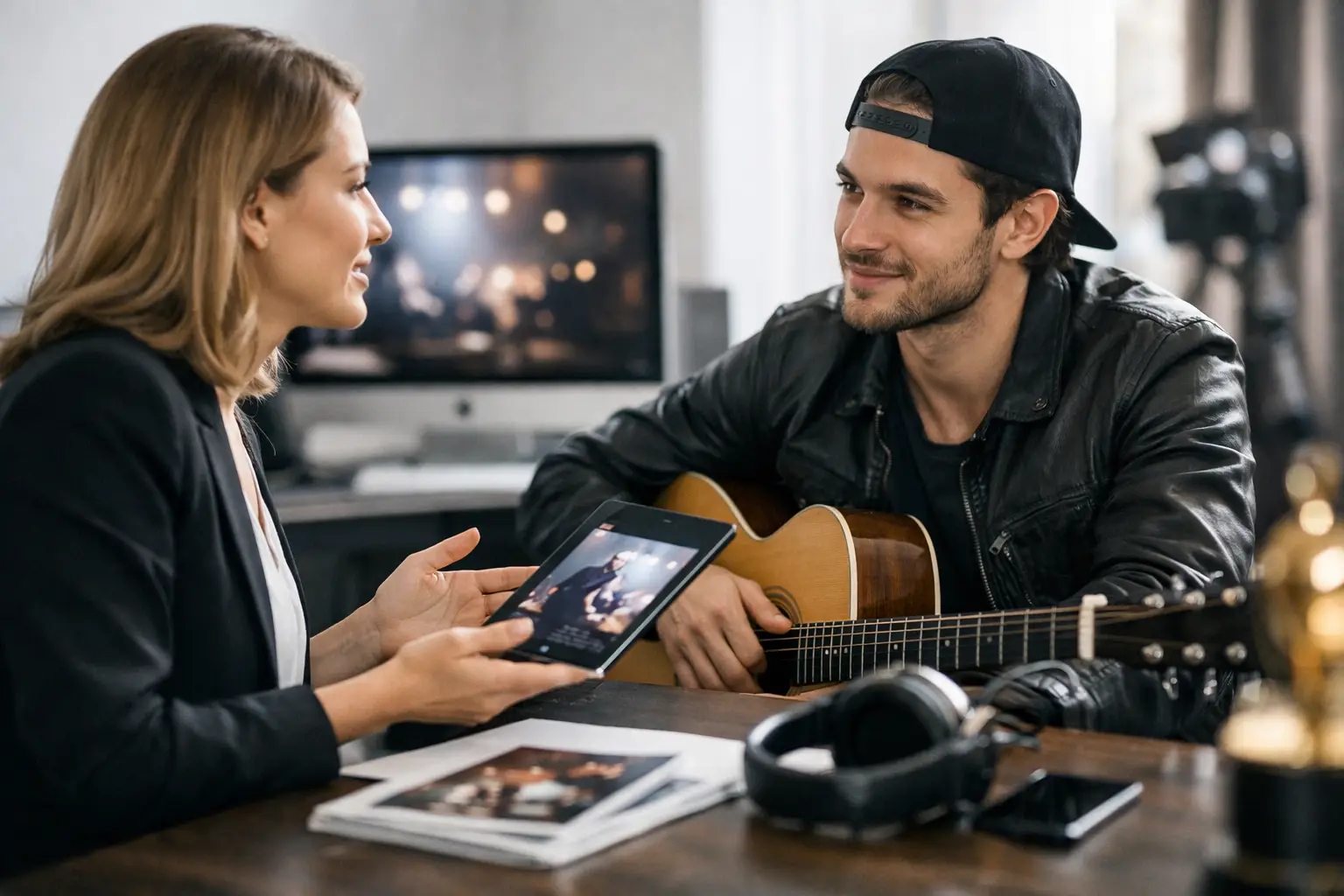
A strong song can still disappear on release day. Not because the music is weak, but because attention is crowded, media cycles move fast, and most artists are trying to build visibility with limited time and even tighter teams. That is usually the moment people start asking, what do music publicists do, really?
The short answer is that music publicists help artists get seen, framed, and talked about in the right places. The longer answer matters more. A good publicist is not just sending emails to blogs and hoping for coverage. They are building a public narrative around an artist, matching that narrative to the right media outlets, timing the message around releases or milestones, and protecting the artist's reputation while momentum is building.
In practical terms, a music publicist sits at the intersection of media, branding, and strategy. They translate an artist's story into something editors, writers, producers, playlist curators, and culture platforms can understand quickly. For independent artists especially, that role can make the difference between dropping music into the void and creating a release cycle that actually moves.
What do music publicists do day to day?
A lot of the work is invisible from the outside. Artists often imagine press coverage as the main output, but the real job starts much earlier.
A publicist first works on positioning. That means figuring out what the artist represents right now. Not in a vague branding sense, but in a way that can survive contact with media. Are they introducing a new sound? Coming off a breakout live run? Tapping into a regional movement? Crossing fashion, culture, and music in a way that gives editors a stronger angle? Publicity starts by making the story legible.
From there, the publicist develops campaign materials. That usually includes a press release, artist bio updates, media pitches, talking points, and an electronic press kit if the campaign needs one. The goal is not to flood inboxes with assets. It is to make it easy for media contacts to understand why this artist matters now.
Then comes outreach. This is where relationships matter. A publicist identifies which outlets, writers, radio producers, podcast hosts, and digital platforms fit the artist's genre, stage, and audience. They pitch selectively, follow up without being sloppy, and try to secure interviews, features, premieres, reviews, live coverage, or mention in trend pieces and roundups.
A capable publicist also manages timing. If a single drops before the story is ready, or if an interview goes live after the moment has passed, the campaign loses force. Publicity is partly about access, but it is also about sequence. Release dates, tour announcements, visual content, and social rollout all work better when they support each other.
Media coverage is only part of the job
A lot of artists hire PR because they want press. Fair enough. But press coverage by itself is not always the real win.
The better outcome is credibility. When an artist is covered by trusted outlets, featured in the right editorial spaces, or included in conversations adjacent to their scene, it changes how the rest of the industry reads them. Managers pay attention. Booking teams notice. Potential collaborators see social proof. Even fans respond differently when an artist looks like they are part of a larger cultural conversation instead of posting into a vacuum.
That is one reason the answer to what do music publicists do includes more than media placement. They create context. A feature story can make a new artist feel established. A smart interview can reposition an artist after a stylistic shift. A run of smaller, well-matched placements can sometimes do more than one flashy mention in a giant outlet that reaches the wrong audience.
This is where trade-offs show up. Big-name press is attractive, but it is not always useful if the audience does not care about the artist's lane. On the other hand, niche coverage in genre-specific media can build stronger downstream results. The right publicist knows the difference.
What a music publicist is not
Artists sometimes expect a publicist to function like a manager, social media strategist, advertiser, distributor, and booking agent all at once. That is usually where disappointment starts.
A publicist is not responsible for fixing weak creative, building your entire visual identity from scratch, or manufacturing demand that does not exist. They can sharpen your story, but they cannot invent chemistry between the artist and the audience. They can pitch media, but they cannot force editors to care. They can help amplify a release, but they cannot replace the need for strong music, clear branding, and consistent output.
Publicity also does not guarantee virality. In fact, some of the strongest PR work is quiet and cumulative. It builds over several releases, slowly increasing recognition and trust. That kind of progress is less dramatic than a viral spike, but usually more durable.
Why independent artists misunderstand PR
Independent artists often come to publicity at the wrong stage or with the wrong expectations. Sometimes they hire PR too early, before the music, visuals, and artist identity are ready. Other times they wait too long, after a release is already out and the window for coverage has narrowed.
The best time to work with a publicist depends on the campaign. If an artist has a strong release, good assets, a real story angle, and enough runway before launch, PR can be effective. If they have one song, no live history, weak artist photos, and no clear positioning, the budget may be better spent getting the foundation in place first.
This is one of the least glamorous truths in artist development. Publicity works best when it supports momentum that already exists or is about to exist. It is an accelerant, not a substitute for movement.
For indie artists, that often means PR should be part of a broader system that includes distribution, release planning, content strategy, audience development, and sometimes playlist outreach. A media hit means more when the rest of the campaign is ready to capture attention.
What do music publicists do during a release campaign?
During an active campaign, a publicist is managing both narrative and pressure.
They may begin weeks ahead of release by pitching exclusives, setting up advance coverage, and shaping the media angle around the project. As launch gets closer, they coordinate interviews, monitor responses, track placements, and adjust targets based on what is landing. If something unexpected happens, a trend catches, a live clip gains traction, or an artist becomes part of a larger conversation, they adapt the pitch and move fast.
After release, the job does not just end. There may be follow-up pitching around videos, tour dates, cultural moments, collaborations, or regional angles. Publicity can extend the life of a release if there is still something to say.
That flexibility matters because not every campaign works the same way. Some albums need long-lead editorial and thoughtful features. Some records are more reactive and work better through rapid digital coverage, podcasts, or local media tied to touring. Genre matters. Scale matters. Timing matters.
How to tell if a publicist is actually good
The obvious sign is relevant coverage, but that is not the only one.
A good publicist asks sharp questions before they promise results. They want to know the artist's goals, audience, timeline, assets, and current traction. They are realistic about fit. They can explain why a campaign makes sense now, what kinds of outlets are realistic, and where the story has weight.
They also know that credibility is fragile. Overpitching, bad targeting, and generic press releases can damage an artist's reputation with media just as easily as no campaign at all. Good PR feels informed. It respects the editor, the audience, and the artist's actual lane.
This is why culturally fluent publicity matters. Especially in independent music, people can tell when a campaign is all surface. The strongest publicists understand scenes, aesthetics, local ecosystems, and how different forms of cultural coverage connect. Music does not live in isolation. Fashion, live performance, internet behavior, community, and visual identity all shape how an artist is perceived.
That broader view is part of why integrated platforms like PaperMedia can be useful for developing artists. When editorial instinct and campaign execution sit closer together, the storytelling tends to get sharper and the strategy becomes more grounded in how discovery actually happens now.
When hiring a music publicist makes sense
If you have music worth amplifying, a clear release plan, and a story that reaches beyond saying the song is out now, publicity may be a smart move. If your real problem is that your catalog is thin, your branding is inconsistent, or your rollout has no structure, PR alone probably will not solve it.
That is not a knock on publicists. It is just the reality of how attention works. Publicity has the most value when it connects an artist's creative moment to a wider conversation and puts that moment in front of people who can extend it.
The best artists understand this early. They do not treat PR as magic. They treat it as leverage.
If you are building a serious music career, that is the more useful question than what a publicist can get you this week. Ask whether your project is ready for amplification, whether the story is strong enough to carry, and whether the campaign has somewhere real to go once people start paying attention. That is where publicity stops being a vanity play and starts becoming part of growth.