
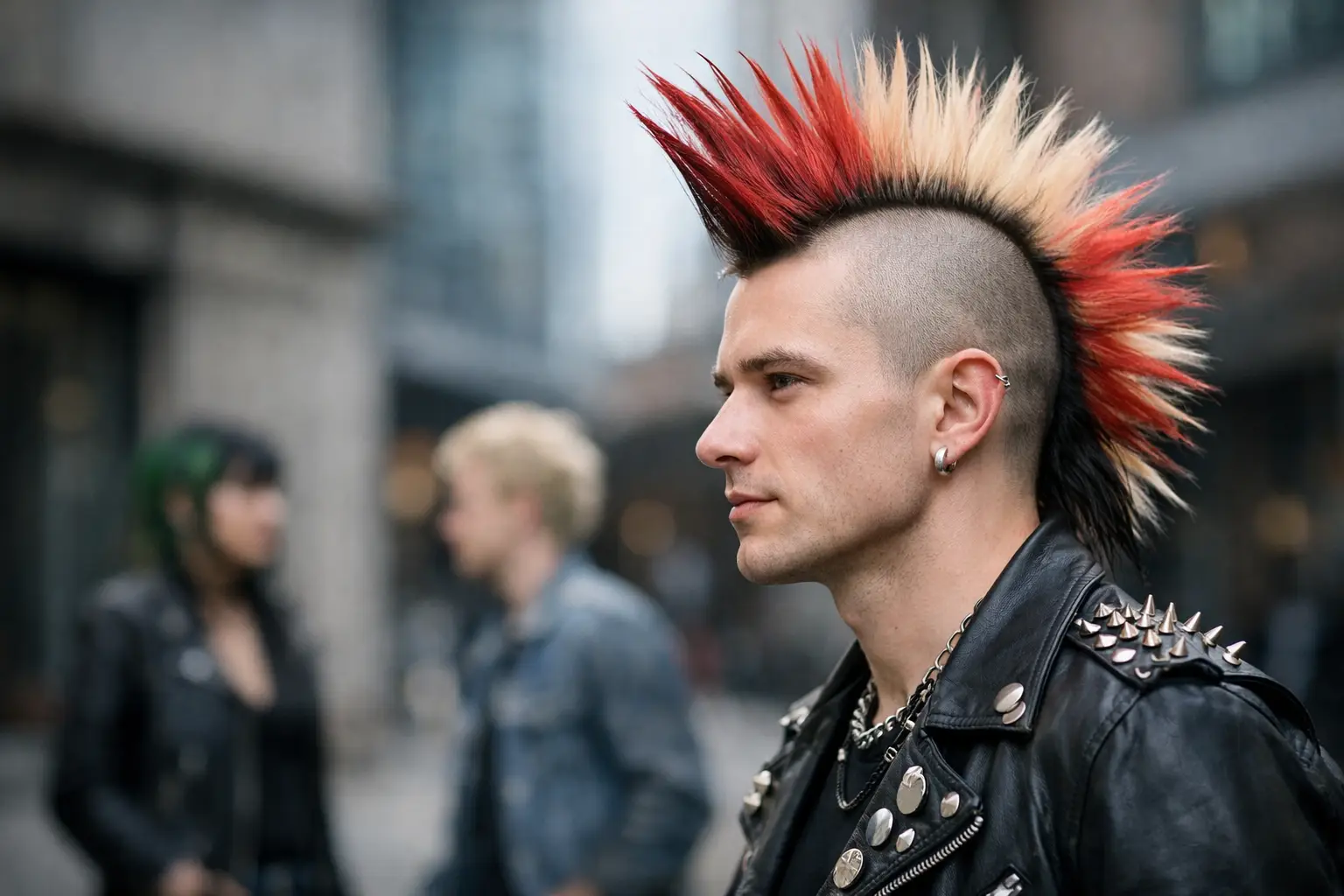
The fastest way to misunderstand punk is to treat it like a costume. The ripped shirt, the safety pins, the leather jacket, the sneer - those are real symbols, but they were never the whole story. Punk started as a reaction to bloated systems, gatekeeping, and polished excess. It was a sound, a visual language, and a way of working that said you do not need permission to make culture.
That idea still matters, especially now, when independent artists are balancing identity, distribution, audience building, and constant pressure to look market-ready from day one. Punk is not frozen in 1977. It keeps resurfacing because the conditions that created it never fully disappeared.
Where punk came from
Punk emerged in the 1970s across different scenes, most famously in New York and London, but it was never one clean origin story. In New York, bands at clubs like CBGB stripped rock back to its bones. Songs were shorter, rougher, and more immediate. In the UK, punk became more openly confrontational, fueled by economic collapse, class tension, and youth frustration. The Sex Pistols, The Clash, Buzzcocks, and others turned alienation into public spectacle.
What connected those scenes was not technical perfection. It was urgency. Punk pushed back against music that had become too distant from everyday life. Arena rock looked expensive. Progressive rock looked elite. Punk walked in wearing cheap clothes, played fast, and made the room feel open again.
That openness mattered as much as the music. You did not need conservatory training. You needed a point of view. The barrier to entry dropped, and with it came a flood of new bands, homemade flyers, indie labels, photocopied zines, and self-built communities. Long before creator platforms and direct-to-fan strategy became industry language, punk was already building parallel infrastructure.
Punk as a system, not just a genre
Calling punk only a genre misses the larger picture. Yes, there are sonic markers - distorted guitars, driving tempos, blunt vocals, minimalism, aggression. But punk is also an operating model.
It values self-release over waiting to be picked. It values scenes over passive audiences. It values function over polish, and conviction over technical excess. That does not mean all punk sounds the same or that every punk artist rejects professionalism. It means the center of gravity is different. The work starts with expression and community, not approval.
This is where punk still speaks directly to independent artists. The modern music business tells emerging acts to be authentic, but it often rewards conformity dressed up as originality. Punk cuts through that contradiction. It asks harder questions. Who owns your output? Who controls your story? Are you building a fan base or just chasing visibility spikes? Are you making something necessary, or just something optimized?
For artists navigating release cycles, PR outreach, distribution, and content strategy, that mindset is more practical than it sounds. Punk's real legacy is not chaos for the sake of chaos. It is creative control paired with resourcefulness.
The many sounds of punk
Anyone looking for a single punk sound will run into a wall quickly. Early American punk, UK punk, hardcore, post-punk, pop-punk, riot grrrl, anarcho-punk, garage punk, egg punk, skate punk - each branch shifted the formula. Some leaned harder and faster. Some got artier. Some got melodic. Some moved toward politics, while others focused on boredom, absurdity, identity, or local life.
That range is part of why punk keeps surviving. It adapts. Hardcore accelerated the intensity and built one of the strongest DIY touring networks in modern music. Post-punk took punk's skepticism and redirected it into experimentation, rhythm, and atmosphere. Riot grrrl used punk as a tool for feminist disruption, community publishing, and direct confrontation with sexism in music spaces. Pop-punk translated some of the energy into hooks and scale, which broadened the audience but also created tension around commercialization.
Those tensions are not a flaw. They are part of the culture. Punk has always argued with itself. What counts as authentic? When does growth become compromise? Can something stay punk after major-label success? There is no single answer, and that uncertainty is one reason the conversation stays alive.
Why punk still matters in music culture
Punk still matters because it solved problems that artists still face. It created pathways outside traditional gatekeepers. It showed that scenes can form around shared values before the market catches up. It made visual identity inseparable from sound. And it proved that independent culture does not need to wait for institutional validation to become influential.
You can see punk's DNA across current music, even when the records do not sound conventionally punk. It lives in hyperlocal scenes, self-shot videos, limited-run merch, direct fan communication, anti-polish aesthetics, and artists who build loyal communities without asking legacy media to define their worth first. It also shows up in the way artists think about ownership. The DIY ethic that ran through punk is now part of broader conversations about masters, independence, platform leverage, and sustainable careers.
At the same time, punk is not automatically pure just because it is independent. DIY can be empowering, but it can also become romanticized overwork. Not every artist should do everything alone. Sometimes the smartest move is building a team that respects the vision while expanding the reach. The point is not isolation. The point is agency.
Punk fashion, image, and media literacy
Punk changed fashion because it understood image as communication, not decoration. Clothes became critique. Torn fabric, chains, slogans, military references, secondhand pieces, and confrontational styling all signaled resistance to mainstream taste and consumer expectations. Even when high fashion later absorbed punk aesthetics, the original charge came from repurposing what was available and turning style into a public statement.
For modern artists, that lesson still holds. Visual identity works best when it extends the music's worldview. Punk did not separate sound from presentation, and audiences do not either. If your imagery, artwork, press photos, stagewear, and live energy all point in different directions, the brand feels unstable. When they reinforce each other, the project becomes memorable.
That said, there is a difference between influence and cosplay. Borrowing punk codes without understanding the politics, class tension, or DIY history behind them can flatten the culture into surface-level branding. Audiences are sharper than many marketers assume. They can tell when an artist is channeling a lineage and when they are wearing one for engagement.
What independent artists can learn from punk
The best lessons from punk are practical. Start before everything is perfect. Build with the people who actually care. Treat local infrastructure seriously. Flyers became feeds, zines became newsletters, scenes became niche online communities, but the mechanics are familiar. Attention grows where commitment is visible.
Punk also teaches artists to value proximity. Before scale, there is the room. Before algorithmic lift, there is the small but real audience that shows up, buys the shirt, reposts the clip, and tells a friend. Artists who skip that layer often end up with reach but no foundation.
There is also a lesson here for managers, labels, and service platforms. The artists who last are not always the most polished at the start. Sometimes they are the ones with the clearest point of view and the strongest cultural gravity. Good development means recognizing signal before it looks obvious. That is one reason editorial platforms with real discovery instincts still matter. They can spot momentum that metrics alone might miss.
PaperMedia sits close to that intersection - where culture, artist development, and infrastructure actually meet. And that is a very punk place to stand, even if the tools look different now.
The contradiction at the heart of punk
Punk's central contradiction is simple. It rejects the machine, then gets absorbed by it. Major brands borrow its aesthetics. Streaming platforms package its playlists. Fashion cycles turn rebellion into retail. That has happened for decades, and it will keep happening.
But absorption is not the same as erasure. Every time punk gets flattened into a style, another scene rebuilds its meaning through action. A new band starts a label. A local promoter creates space where none existed. An artist releases work that is too jagged, too direct, or too honest to fit cleanly into market logic. That cycle keeps punk alive.
So what does punk mean now? Not one look, not one tempo, not one era. It means refusing passivity. It means building culture with whatever tools are available. It means understanding that independence is not a vibe but a practice. And for artists trying to make work that lasts beyond a rollout, that is still a useful place to begin.
The helpful part is this: you do not have to sound like the Ramones or dress like a London club kid to carry punk forward. You just need to make something real, build it with intention, and protect the part of the process that belongs to you.
