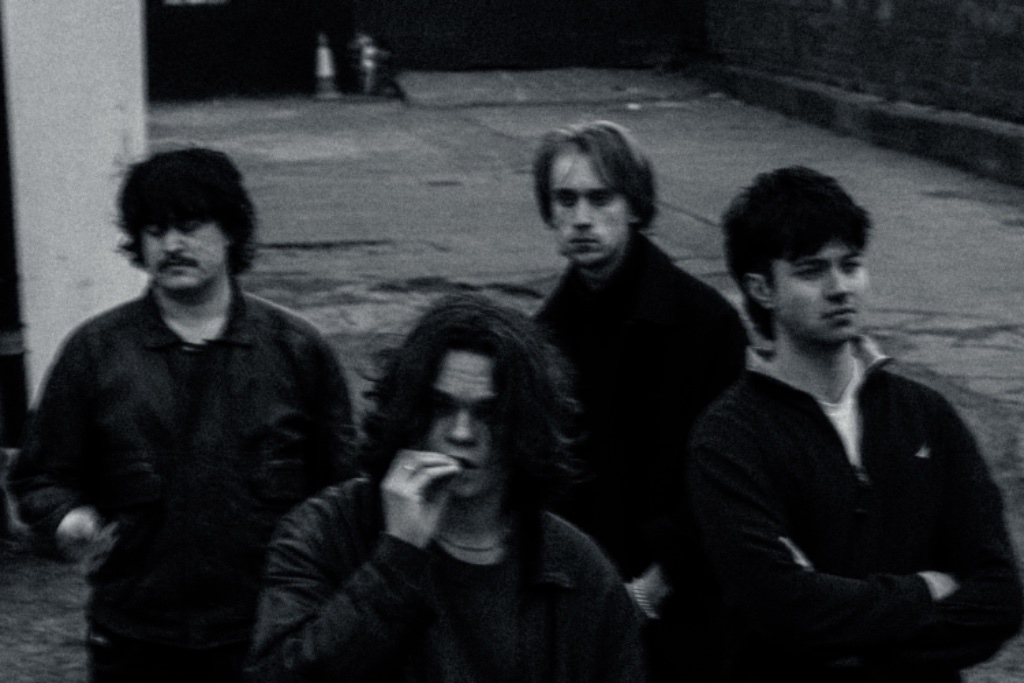
Anemoia: Dublin Noise Rock Finding Beauty in the Breakdown
From home-recorded tapes to the stages of Dublin, anemoia are turning nostalgia into a frequency — and songs like Crutch and Colour Me Blue prove it.
Listen on Spotify
There is a specific kind of nostalgia that doesn't belong to you — a wistful longing for a time you never actually lived through. The dictionary calls it anemoia. A four-piece from Dublin heard the word, felt the shape of it, and decided it was the only name that could hold the weight of what they were making. anemoia — pronounced an-em-oi-uh — are a noise rock and shoegaze band building their entire sonic identity around the idea that nostalgia is not a feeling but a frequency. It is the hum underneath everything. It is the static between stations.
The Sound: Where Noise Rock Meets Shoegaze and Nostalgia Becomes a Frequency
If you have spent any time in the underground Irish music scene over the last few years, you already know the shape of what is happening there. Dublin has quietly become one of the most fertile breeding grounds for guitar-driven, emotionally combustible music in Europe — a city where the legacy of My Bloody Valentine is not a museum piece but a living, breathing inheritance. anemoia sit squarely in that lineage, but they are not interested in nostalgia as an aesthetic. They are interested in it as a wound.
"Definitely a bit bold, flawed, noisy, uneasy, dreamy and a bit dejected," is how guitarist and vocalist Ger describes the band's sound. "It's obviously inspired, but we try and make it as intimate as possible. This has seeded from building ourselves around different scenes like the noise rock and shoegaze scene in the US right now, and the good roster in Ireland. And then with our writing development, I suppose it's trying to capture nostalgia — the pain that follows through with that and where we grew up as separate entities — through our words and soundscape in the least pretentious way possible."
That last clause is important. In a genre where pretension is practically a uniform, anemoia are actively working against it. Their music is noisy, yes. It is dissonant, yes. It is drenched in the kind of guitar fuzz that makes your chest vibrate. But underneath all of that is something raw and unguarded — a willingness to be vulnerable that cuts through the walls of sound. You can hear it in the way a melody surfaces through the distortion, hangs in the air for a moment, and then gets swallowed again. It is the sound of something trying to be felt.
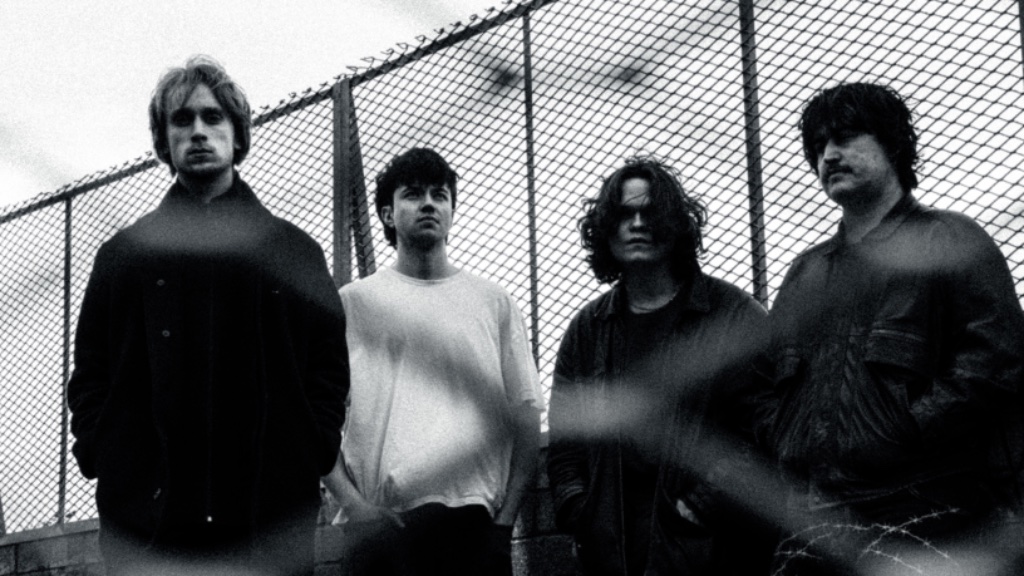
anemoia photographed against a chain-link fence in Dublin. Photo by Jasmine Grace.
Crutch: The Song That Built the Foundation
If there is a single track that serves as the Rosetta Stone for understanding what anemoia are doing, it is Crutch. Released in 2023 as a standalone single, Crutch is the moment where the band's identity crystallized — where the tape-hiss home-recording roots of their earliest work collided with the full-force live sound they had been developing on Dublin's stages.
Crutch opens with a guitar figure that sounds like it is being beamed in from a different decade — the kind of shimmering, tremolo-heavy chord progression that immediately invokes the ghost of My Bloody Valentine's Loveless without ever feeling like a pastiche. Then the rhythm section locks in, and the track begins to breathe. Ger's vocals sit low in the mix, half-buried under the guitar textures, which is not a production choice born from shyness but from intention. The voice in anemoia's music is another instrument — a texture, a frequency, another layer of the soundscape rather than the focal point it would be in a more conventional rock arrangement.
The track builds and builds, layering dissonance upon dissonance, until the chorus hits and the walls collapse. It is the kind of crescendo that shoegaze does better than any other genre — the moment where the noise becomes so total and so overwhelming that it crosses over into something almost transcendent. You stop hearing individual instruments. You start hearing a feeling. That feeling, in anemoia's hands, is always nostalgia — but a nostalgia that hurts.
The lyrics of Crutch, like much of anemoia's work, deal with dependency — on a person, on a feeling, on a version of yourself that no longer exists. The word "crutch" implies something you lean on because you cannot stand alone, and the song interrogates that need with a kind of brutal honesty. It is not self-pitying. It is self-aware. And that awareness — the ability to look at your own fragility without flinching — is what separates anemoia from the dozen other noise rock bands currently operating in the same sonic territory.
With over 8,700 streams on Spotify alone, Crutch remains one of the band's most enduring and defining releases — a track that continues to find new listeners as the Dublin shoegaze scene gains international attention.
Colour Me Blue: The Indie Vibe We Love
If Crutch is the foundation, Colour Me Blue is the proof of range. The track — listed on Spotify as colourmeblue — is anemoia at their most intoxicatingly melodic, a song that trades the full-throttle noise assault for something more hypnotic, more dreamlike, more deeply rooted in the shoegaze tradition of using texture as emotion.
Colour Me Blue is two minutes and twenty-nine seconds of pure atmosphere. It opens with a guitar tone so thick and so warm that it feels almost tactile — like you could reach out and touch the sound. The bassline, courtesy of Isaak, walks a melodic path that recalls the best of Interpol's Carlos Dengler — a deliberate, unhurried line that provides the emotional spine of the track while the guitars swirl and decay around it. Matt's drumming is characteristically understated, a jazz-trained approach that prioritises feel over flash, letting the groove breathe rather than driving it forward.
The title itself is a study in the band's approach to language. "Colour me blue" is both a literal instruction — paint me in sadness — and a nod to the visual quality of anemoia's music. Their songs have colours. Colour Me Blue is indigo and grey, the colour of a Dublin sky at 4pm in November, the colour of a room you used to know. It is the indie vibe at its most potent — not the polished, radio-ready indie of the 2010s, but the raw, lo-fi, emotionally unfiltered indie of the early 90s and the contemporary underground.
What makes Colour Me Blue so essential is the way it demonstrates anemoia's understanding of dynamics. Where a lesser band would maintain a single level of intensity throughout, anemoia understand that the power of noise comes from contrast. The loud parts are loud because the quiet parts are quiet. The distorted parts hit because the clean parts exist. It is a masterclass in tension and release from a band that, at the time of the track's release, was still operating largely below the radar of the mainstream Irish music press.
The Band: Four Separate Entities, One Shared Frequency
anemoia are not a band that was assembled. They are a band that grew — four musicians from different backgrounds who found each other in Dublin and discovered that their individual histories, when combined, produced something none of them could have made alone. The submission they sent to PaperMedia described them as "a Dublin noise rock band making heavy, dissonant guitar music rooted in nostalgia," evolving "from home-recorded tape roots into an intense live act."
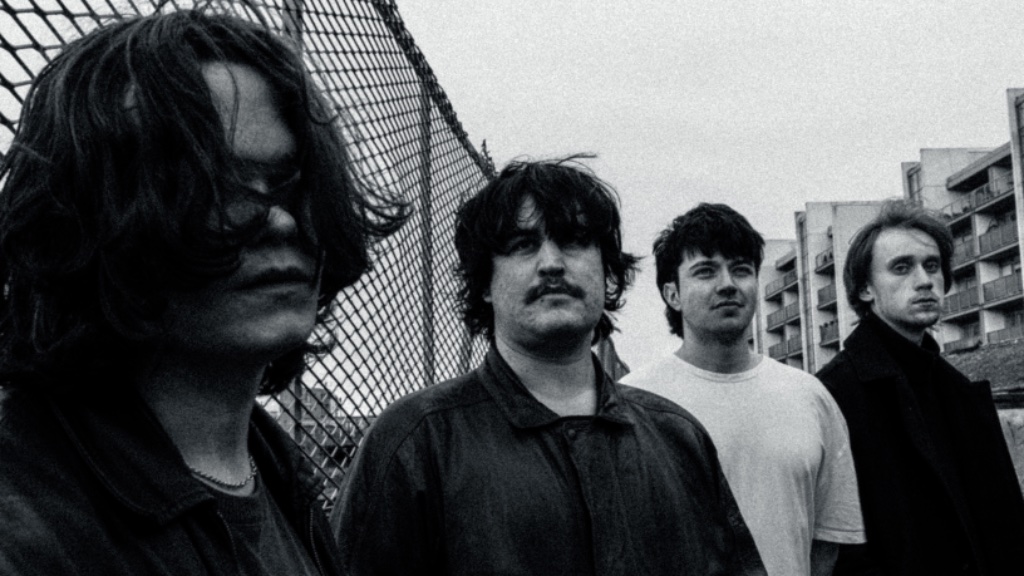
anemoia photographed in an urban setting. Photo by Jasmine Grace.
Ger handles guitar and vocals, and his approach to songwriting is the engine of the band's sound. His influences range from My Bloody Valentine — the obvious touchstone — to Leonard Cohen, which might seem like a strange combination until you listen to the lyrics. Cohen's gift was finding the universal in the deeply personal, the sacred in the profane, and Ger brings that same sensibility to anemoia's lyrics. The words are intimate, almost conversational, even when they're buried under three layers of guitar fuzz.
Isaak plays bass, and his influences read like a syllabus for a course in alternative music: Interpol, Sprain, Gilla Band, The Beatles. His basslines are the melodic foundation of anemoia's songs — not the rhythmic placeholder that bass often becomes in noise rock, but a lead instrument in its own right. "Carlos' basslines from Interpol changed the way I thought about writing basslines," Isaak told RTÉ. "A lot of noise rock like Sprain and Gilla Band changed the way I thought about music in general."
Matt sits behind the drum kit, and his background is perhaps the most formally rigorous in the band. He has been playing music since he was three years old, starting at the Wexford School of Music, progressing through violin and clarinet before finding his way to the drums at twelve. "I grew up in a very musical family doing a lot of musical theatre and slowly transitioned from being on the stage to underneath it in the pit with the band," he told RTÉ. "This is when I decided I wanted to have a career in music." His training was primarily in jazz, which gave him what he describes as "a more unorthodox approach to the drum kit, focusing on letting the rest of the band excel while also having the confidence to have a conversation with the members through the music that we play." That last detail — the idea of the drums as a conversational instrument — is the key to understanding why anemoia's rhythm section feels so alive. Matt is not keeping time. He is responding.
Rob rounds out the lineup on guitar, and his relationship with music began with The Prodigy's Invaders Must Die — a record he and his brother played in the car "far too much for our parents' health." If his bandmates bring the shoegaze and the noise rock, Rob brings the electronic aggression of acts like The Prodigy and Deftones, a percussive approach to guitar that adds a layer of physicality to the band's sound. His favourite song to listen to on repeat, he says, is I Let It In and It Took Everything by Loathe — a track that itself sits at the intersection of shoegaze and metal, which tells you something about where anemoia's sound might go next.
Don't miss a drop
Get new music first.
Weekly artist spotlights, playlist drops, and editorial — straight to your inbox.
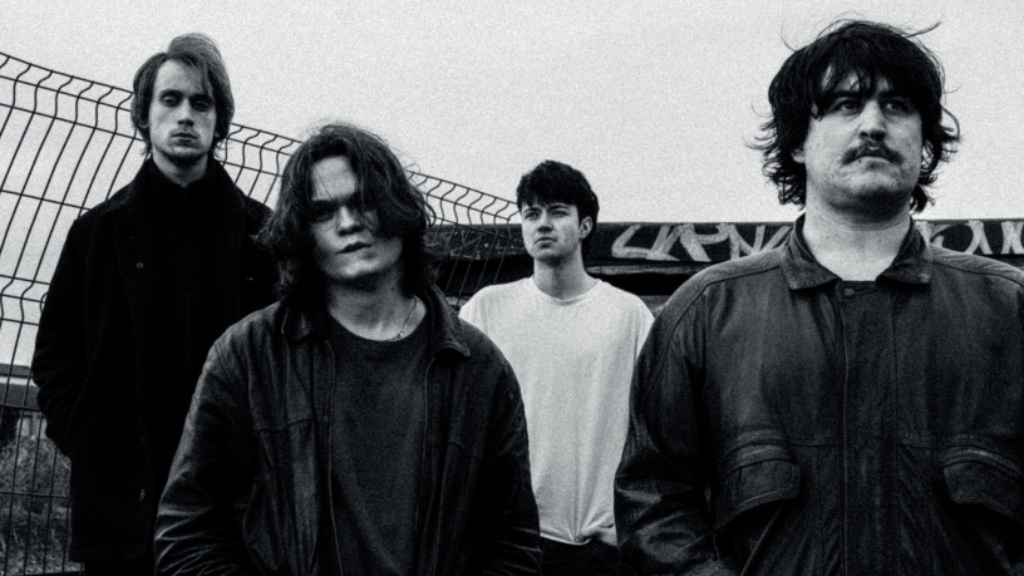
anemoia photographed against a concrete wall. Photo by Jasmine Grace.
The Dublin Scene and the Irish Shoegaze Renaissance
You cannot understand anemoia without understanding Dublin. The city has always had a complicated relationship with guitar music — proud of its heritage but wary of being defined by it, eager to move forward but unwilling to abandon the past. It is, in other words, the perfect breeding ground for a band whose entire aesthetic is built on the tension between nostalgia and forward motion.
The Irish shoegaze and noise rock scene has been quietly building momentum for years now. Bands like Gilla Band (formerly Girl Band) proved that Irish noise rock could be confrontational, experimental, and still find an international audience. IST IST, with whom anemoia have shared stages, brought a post-punk edge to the conversation. They Are Gutting a Body of Water — the brilliantly named Philadelphia band known as TAGABOW — represented the transatlantic connection, the proof that the noise rock and shoegaze community was a conversation that crossed oceans.
anemoia have positioned themselves squarely within this lineage. They have shared stages with IST IST and TAGABOW. They have received early support from Radio X and RTÉ 2FM — the latter being Ireland's national youth music station, the kind of institutional backing that matters in a country where national radio still has genuine cultural power. And they have been featured on RTÉ, Ireland's national broadcaster, in a "Behind the Music" profile that treated them with the seriousness usually reserved for established acts.
The Spotify numbers tell their own story. Cowboy, their 2025 single, has over 15,000 streams. In Yr Dreams sits at nearly 13,000. Crutch has passed 8,700. Colour Me Blue has over 6,700. For a noise rock band from Dublin operating largely independently, these are not vanity numbers — they represent a genuine, growing audience that is finding anemoia's music through playlists, word of mouth, and the slow accumulation of reputation that defines the underground.
The Journey: From Home-Recorded Tapes to the Fog
The trajectory of anemoia is not a story of overnight success. It is a story of slow, deliberate growth — the kind of career arc that is increasingly rare in an era of viral moments and algorithm-driven fame. The band began, as so many great bands do, with home recordings. Tapes, specifically. The lo-fi aesthetic that defines their early work was not a stylistic choice but a practical one — they were recording at home, on equipment that could not capture the full scope of what they were hearing in their heads.
But something happened as they moved from the bedroom to the stage. The songs, which had been intimate and contained on tape, expanded. The noise that had been implied became actual. The dissonance that had been a texture became a physical force. anemoia in a live setting is a different experience from anemoia on record — louder, more confrontational, more cathartic. They became, as their submission described it, "an intense live act," and that intensity became the crucible in which their sound was refined.
anemoia photographed in a semi-circle outdoors. Photo by Jasmine Grace.
Their debut album Driving Songs, released in 2022, was the first document of this evolution — a collection of tracks that captured the moment where the home-recording aesthetic met the live-band energy. It was a promising debut, but it was also clearly a starting point. The singles that followed — In Case I Don't See Ya in 2021, Crutch in 2023, Threads in 2024, Cowboy in 2025 — each represented a step forward, a refinement of the vision, a deepening of the sound.
Their most recent release, Downer, is the latest single, and it finds the band at their most fully realised. It is the sound of a band that has spent years learning how to be loud and is now learning how to be quiet — or rather, learning that the most powerful noise is the noise that knows when to stop. Downer is a track that breathes, that has space inside it, that understands that the silence between notes is as important as the notes themselves.
And then there is The Fog. The upcoming EP, which anemoia described in their submission as "the conceptual framework" of their next phase, with "the next 2 singles ready to go." If Driving Songs was the document of where they had been and the singles were the map of where they were going, The Fog promises to be the destination — or at least the first clear view of it. The title itself is telling. Fog is the visual equivalent of anemoia's sound: something that obscures and reveals at the same time, something that makes the familiar strange and the strange familiar, something that you can feel before you can see.
The Influences: A Map of the Territory
To understand anemoia's sound, it helps to understand the map of influences they have drawn for themselves. Their submission to PaperMedia listed their favourite artists: My Bloody Valentine, Leonard Cohen, They Are Gutting a Body of Water, Interpol, Deftones. Their influences: TAGABOW, Blue Smiley, Cashier, Title Fight.
This is not a random list. It is a carefully curated map of the territory anemoia are exploring. My Bloody Valentine gives them the shoegaze foundation — the idea that guitar noise can be beautiful, that distortion can be warm, that a wall of sound can be a place to live rather than something to hide behind. Leonard Cohen gives them the lyrical seriousness — the conviction that words matter, that a song should say something, that poetry and rock music are not mutually exclusive. Interpol gives them the rhythmic precision and the bass-driven melodic approach. Deftones give them the heaviness, the willingness to be aggressive, the understanding that beauty and brutality can coexist.
TAGABOW and Blue Smiley give them the contemporary underground credentials — the connection to the current wave of noise rock and shoegaze that is happening in basements and DIY venues across the world. Cashier and Title Fight give them the emo-adjacent emotional honesty, the willingness to be earnest, the understanding that vulnerability is not weakness.
What anemoia have done is take all of these influences and found the place where they intersect — the place where My Bloody Valentine's noise meets Cohen's words, where Interpol's precision meets Deftones' aggression, where TAGABOW's underground credibility meets Title Fight's emotional directness. That intersection is a narrow space, and most bands cannot hold all of those elements at once. anemoia can.
Why anemoia Matters: The Indie Vibe We Love and Appreciate
There is a temptation, when writing about a band like anemoia, to frame them as part of a trend — the shoegaze revival, the noise rock renaissance, the return of guitar music. But that framing does them a disservice. anemoia are not part of a trend. They are a band that has found something true and is following it with a discipline and a sincerity that is genuinely rare.
The indie vibe we love and appreciate — the one that made us fall in love with music in the first place — is not about polish. It is not about production. It is not about the right references or the right aesthetic. It is about honesty. It is about a band making the music they need to make, the music they cannot help making, the music that is true to who they are. anemoia have that honesty. You can hear it in every track they have released. You can feel it in the way the guitars swell and collapse, in the way the basslines walk their patient paths, in the way the drums converse rather than command, in the way the vocals sit low in the mix — not hidden, but integrated, part of the texture rather than separate from it.
Songs like Crutch and Colour Me Blue are not just good songs. They are evidence of a band that has found its voice and is learning, track by track, how to use it. They are the sound of four people from different musical backgrounds coming together around a shared feeling — the feeling of nostalgia for something you cannot name, the feeling of longing for a place that may not exist, the feeling of standing in a room full of noise and finding, somewhere inside it, something that feels like home.
That is anemoia. Not a band to watch. A band to listen to. Now.
All photography by Jasmine Grace.
Connect With the Artists
Follow everyone featured in this story.
Limited Availability
We work with a select number of artists.
Coverage is curated, not distributed.
Apply for Coverage
PaperMedia · Editorial reel
View on InstagramStay Updated
Subscribe to our Weekly Newsletter
Join our mailing list to receive the latest artist spotlights, exclusive interviews, and underground music discovery directly in your inbox.
Discussion
Start the Conversation
Be the first to share your thoughts on this article.
Join the Discussion
Share your perspective — your email stays private.